Helical Piles
Screw Pile Foundation
Helical Piles excel in situations where deep foundations are needed.
They are cost-effective and maintain minimal environmental impact.
Certifications & partnerships
What are Helical Piles
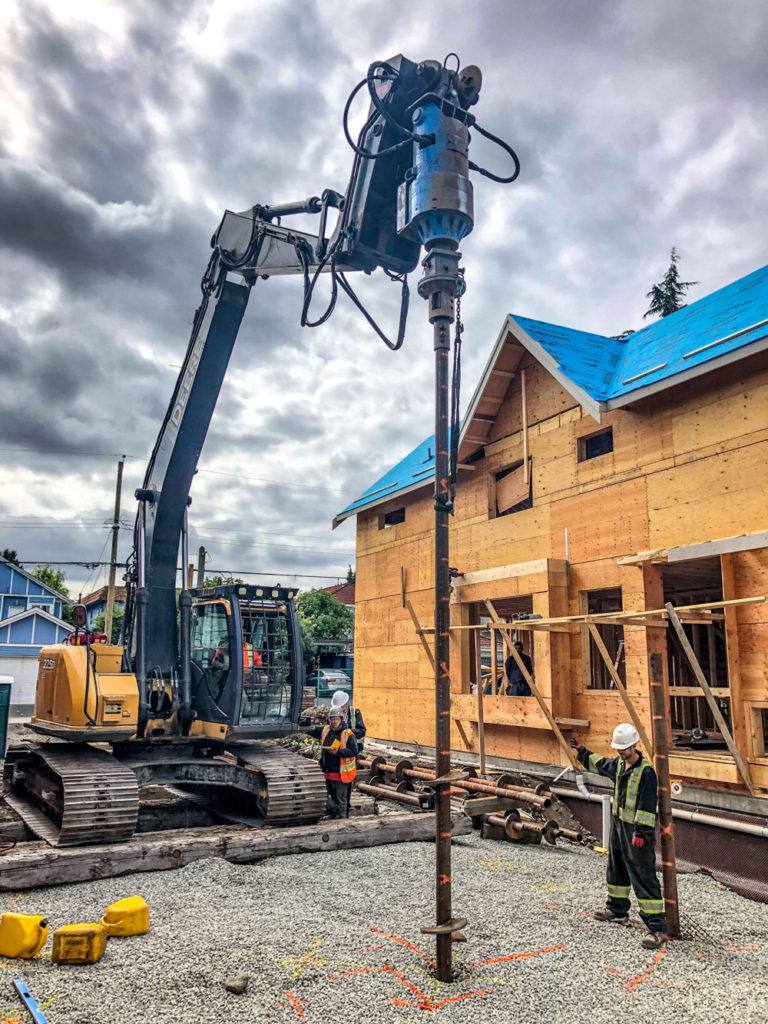
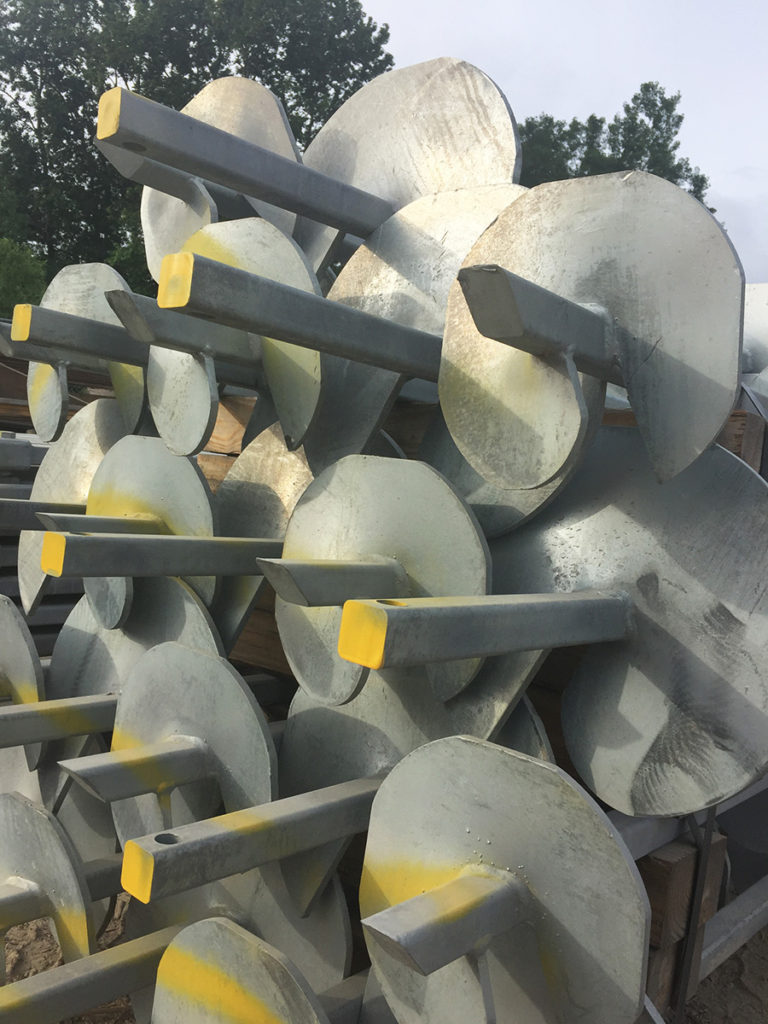
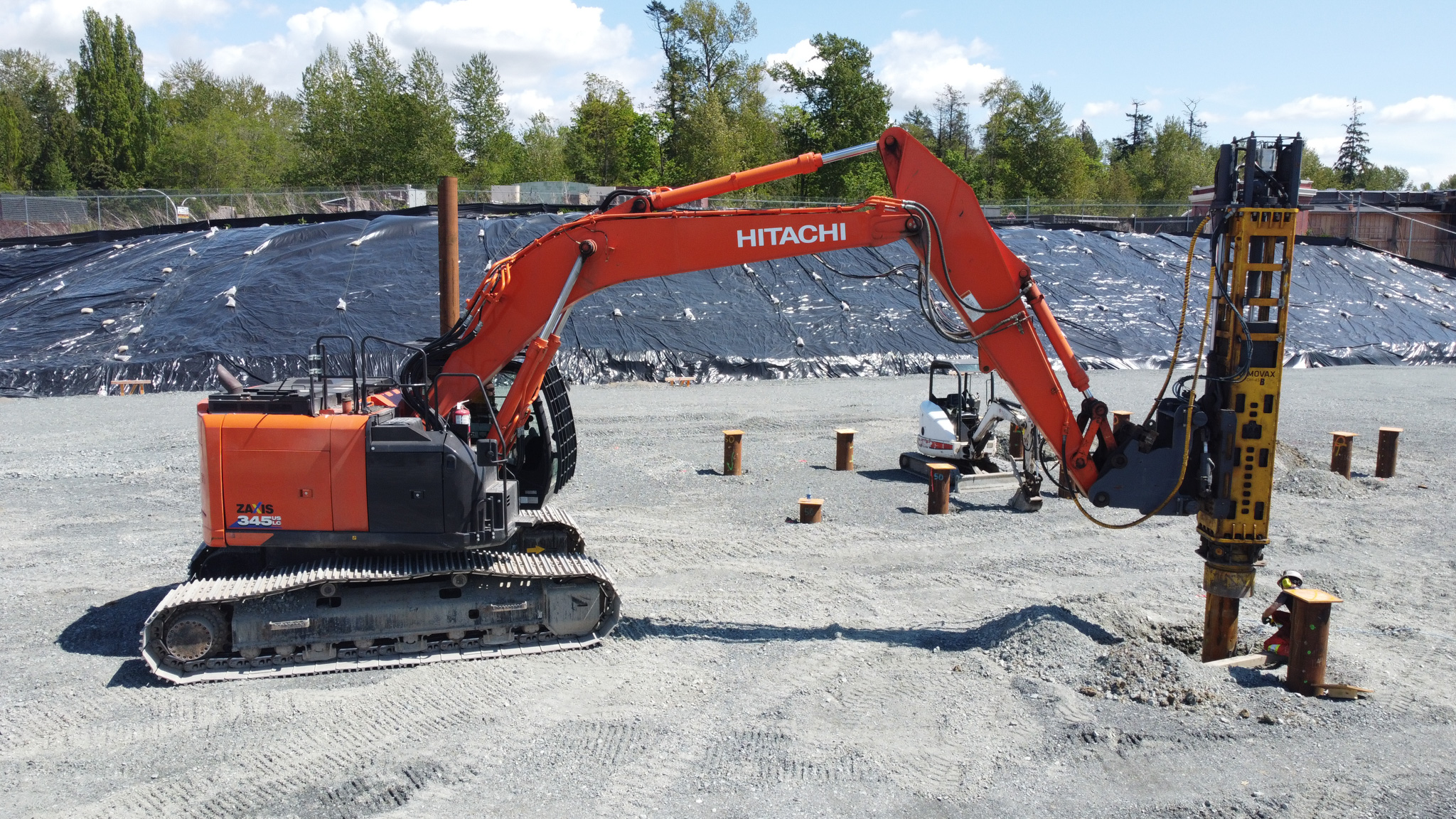
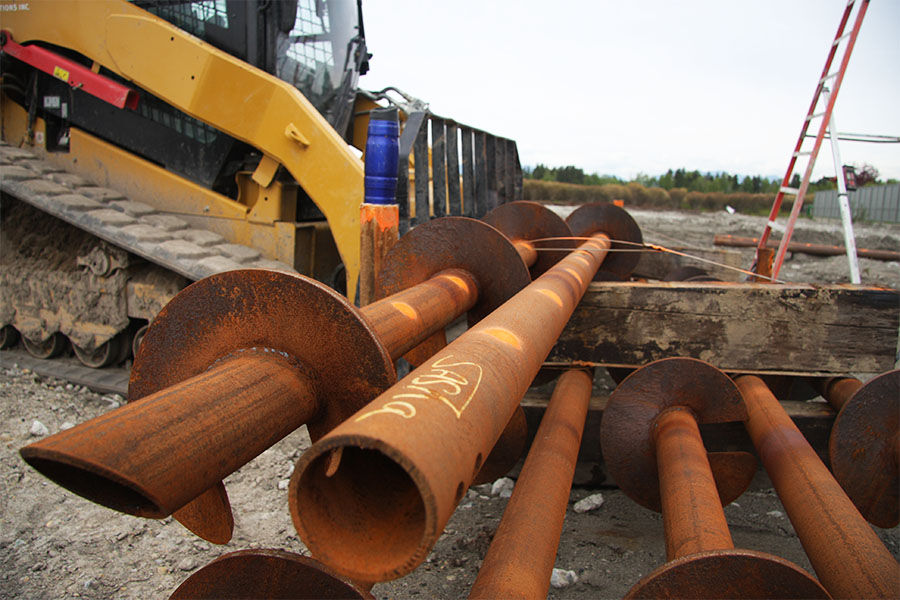
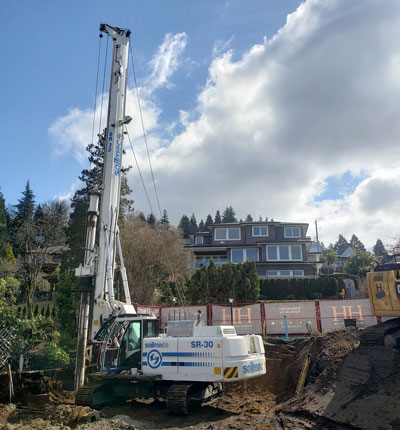
Also called screw piles, they serve as piles for deep foundations. In soft soils, they transfer a structural load further down to stronger and less compressible materials. Helical piles are screwed into the ground to support new structures or to underpin existing structures that have settled, and can be used in some applications that call for a driven pile, drilled pier, or minipile.
Screw piles are celebrated for their performance in situations where deep foundations are needed or where construction is required close to other structures. They tend to be the most cost effective and practical option while maintaining minimal environmental impact.
Looking to find out the cost of helical piles for your project?
Helical Pile Applications
01
New Builds
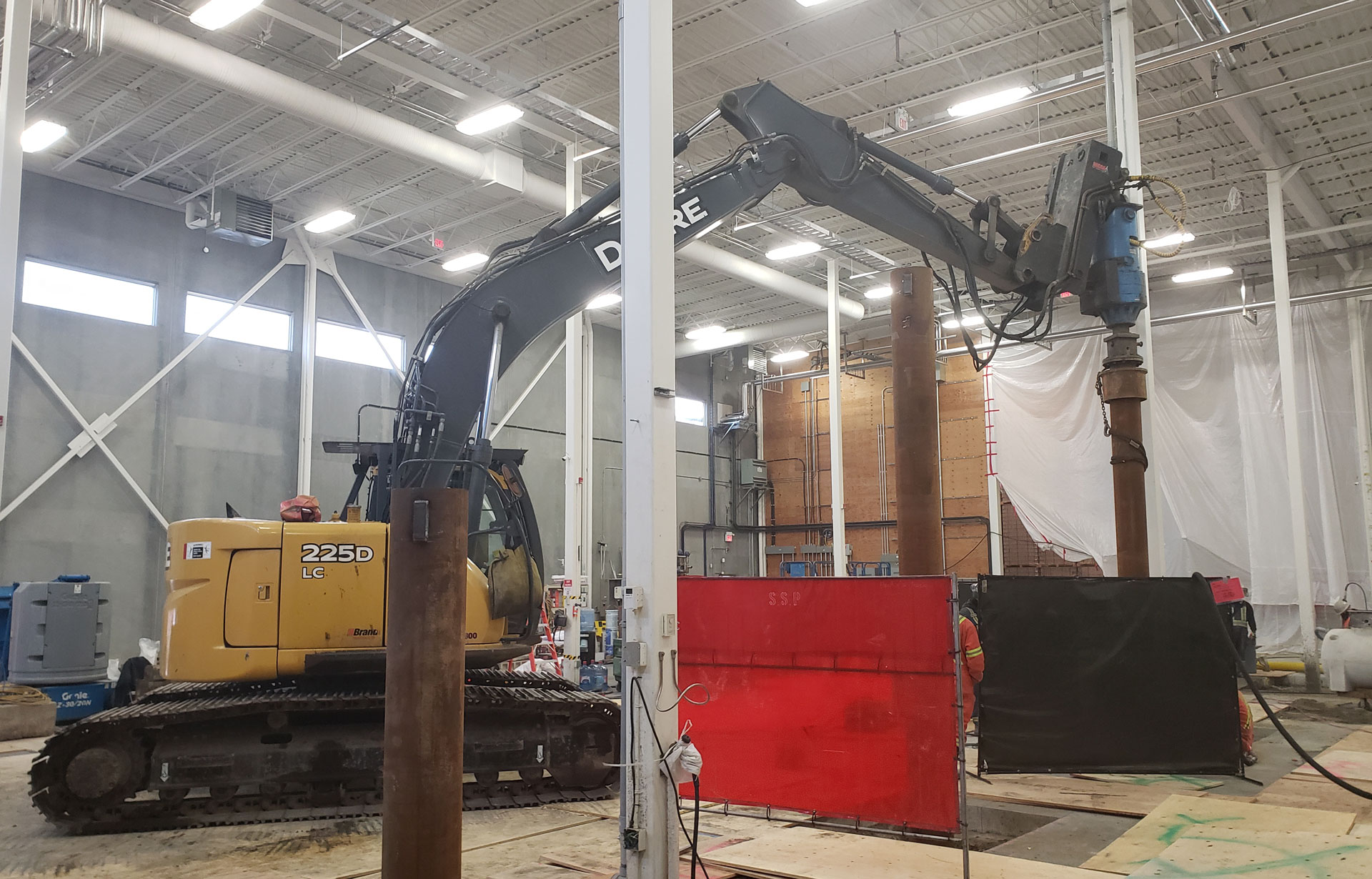
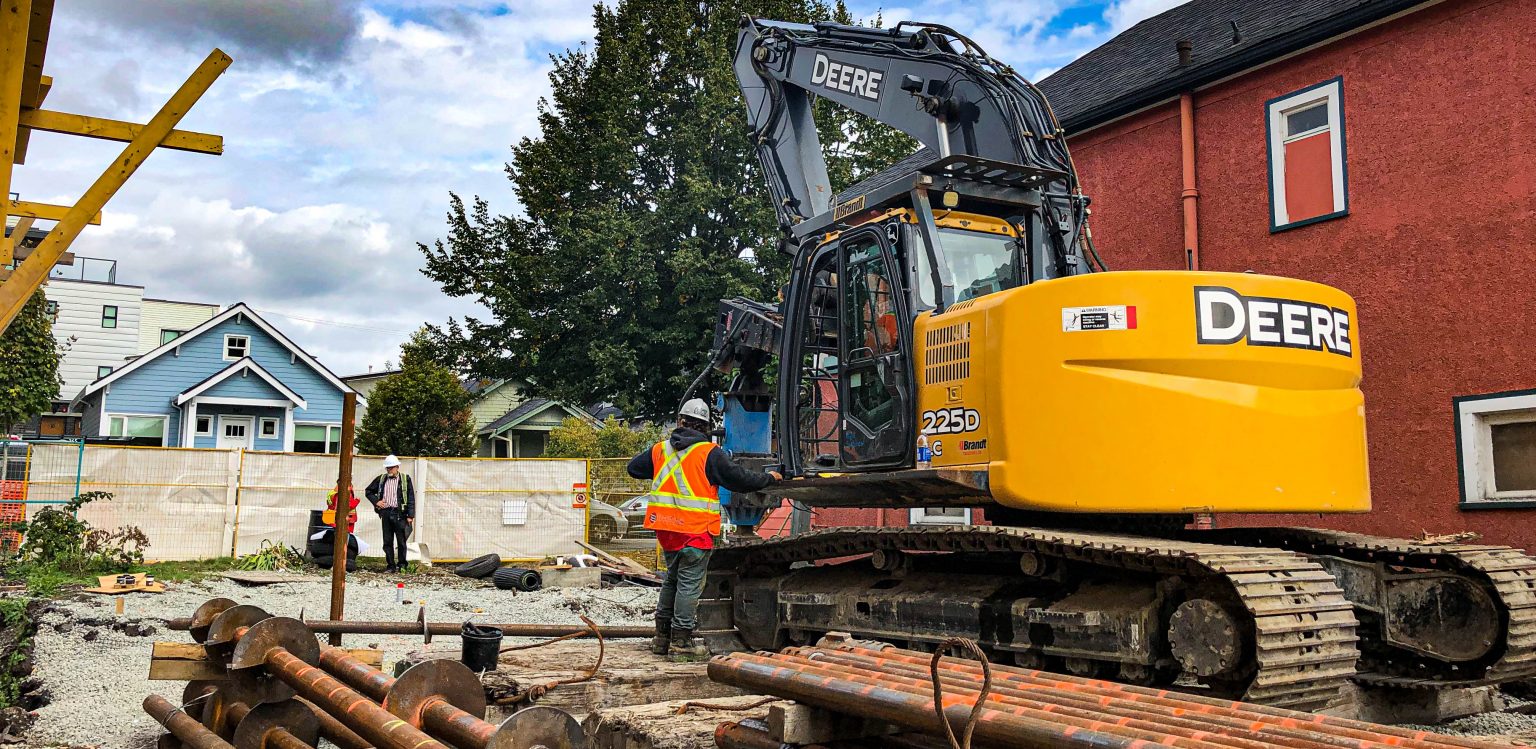
Helical piles are well suited to new residential construction on soft or peat-heavy ground in dense urban neighbourhoods, where vibration concerns rule out driven alternatives and narrow roads limit equipment access. They can be installed with minimal disruption to surrounding properties and require no spoils removal.
02
Environmentally Sensitive Sites
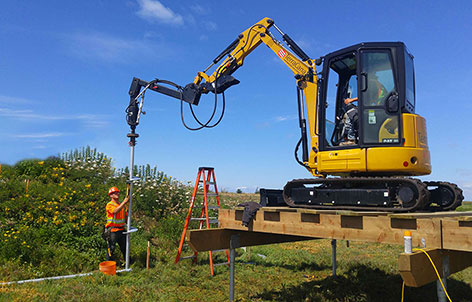
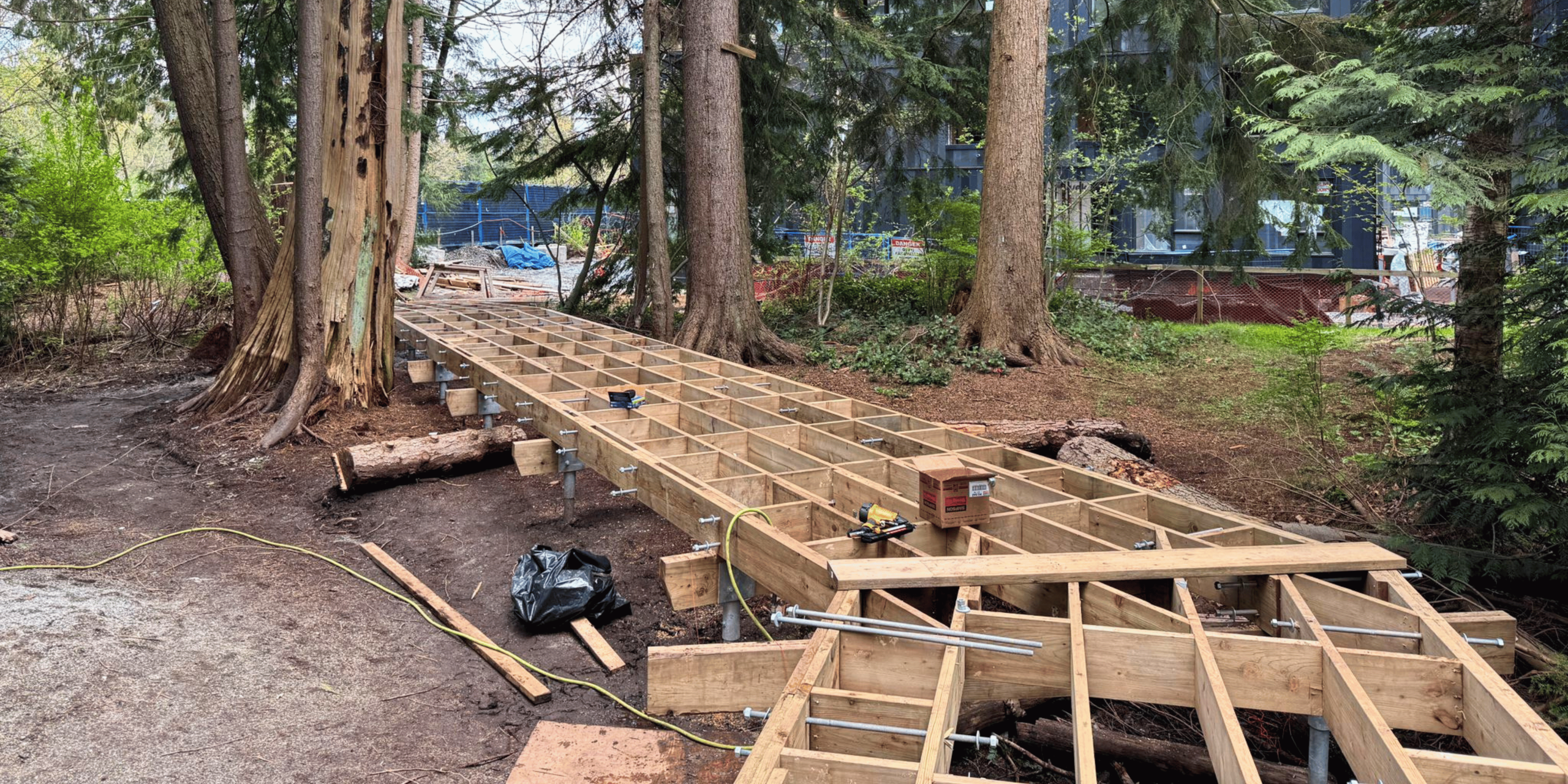
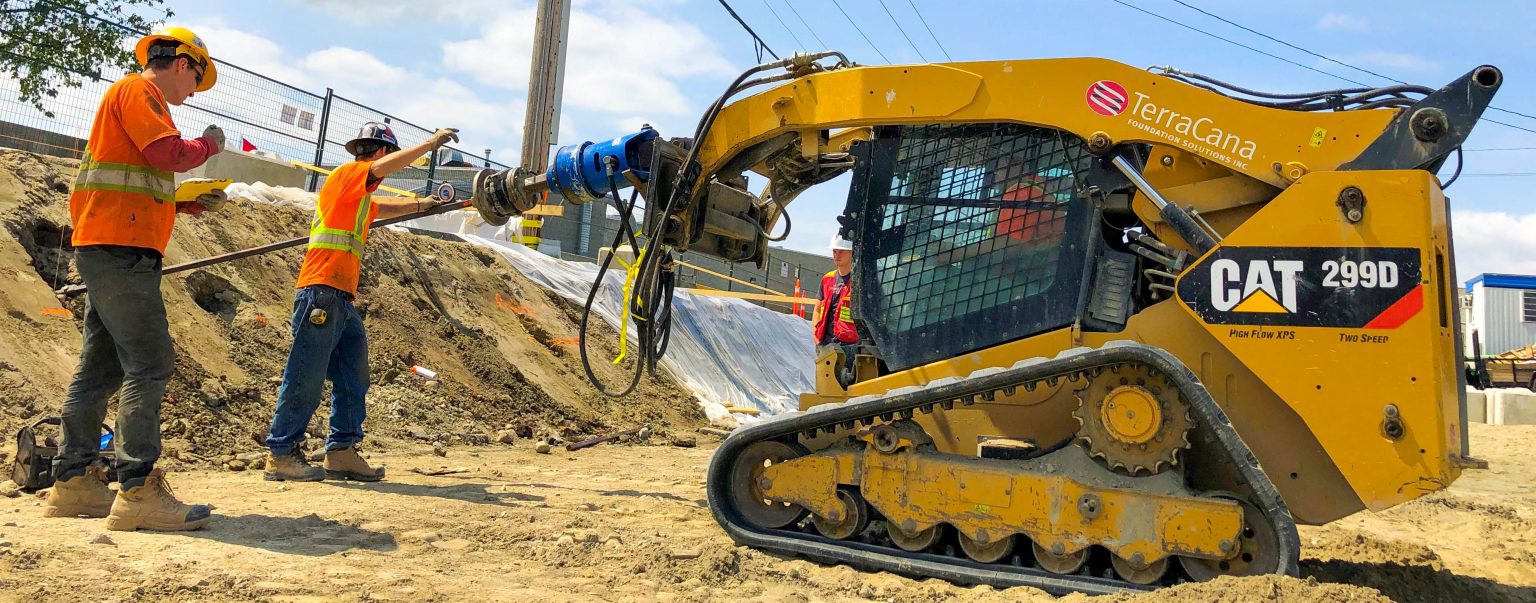
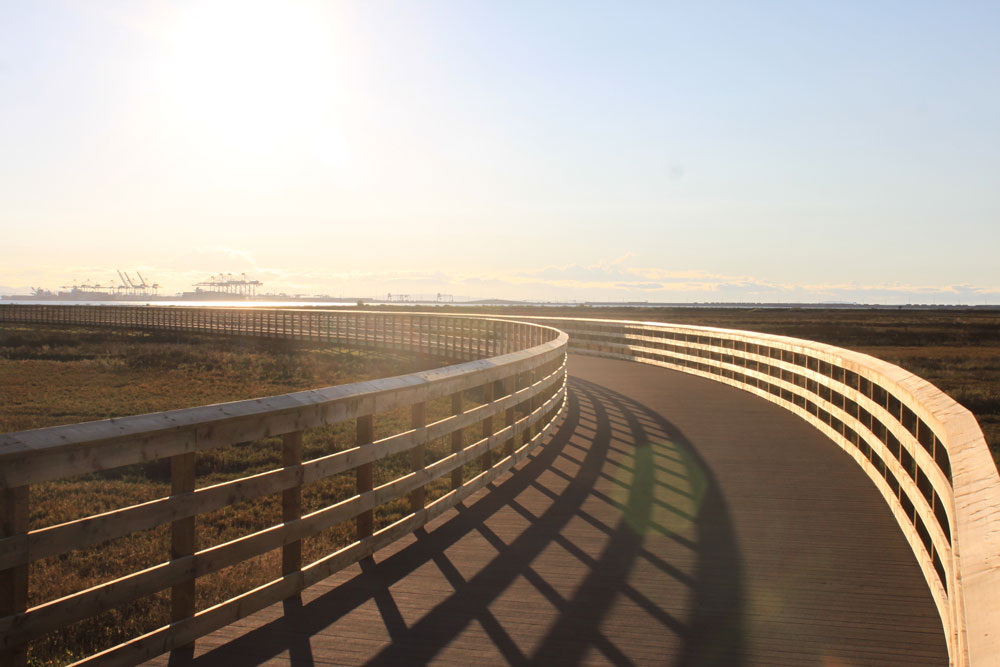
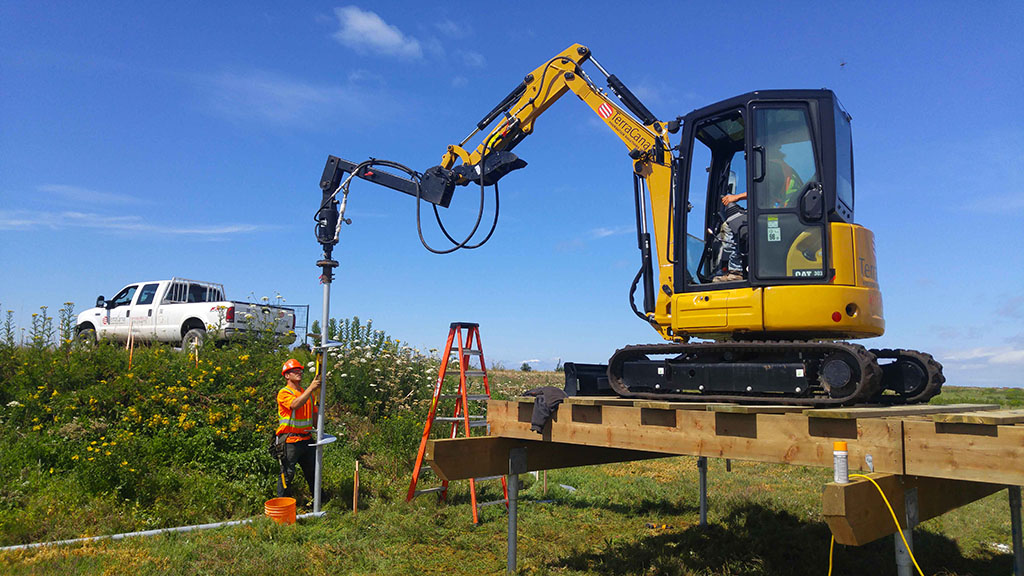
Where nesting birds, rare plants, or protected waterways are present, helical piles are the preferred deep foundation option. They displace minimal soil, require no excavation, and can be installed using compact equipment sized to fit through pedestrian pathways and sensitive terrain.
03
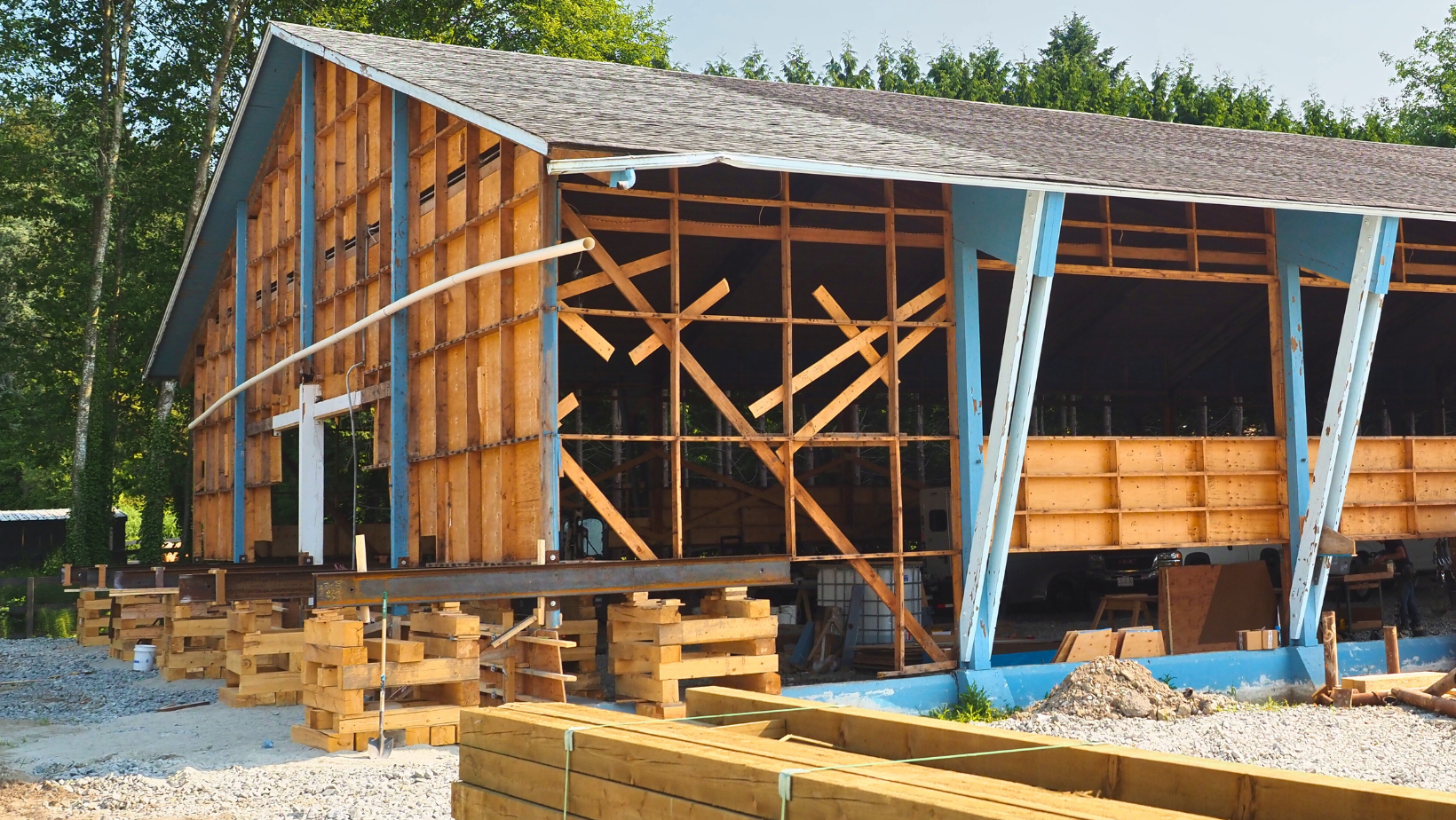
Existing Structures
When an existing structure requires additional load capacity or an original foundation design proves impractical due to variable soil conditions, helical anchors provide real-time capacity verification during installation. Torque readings at every anchor location confirm the pile has reached the required bearing stratum — no waiting on post-installation testing.
04
Retaining Walls
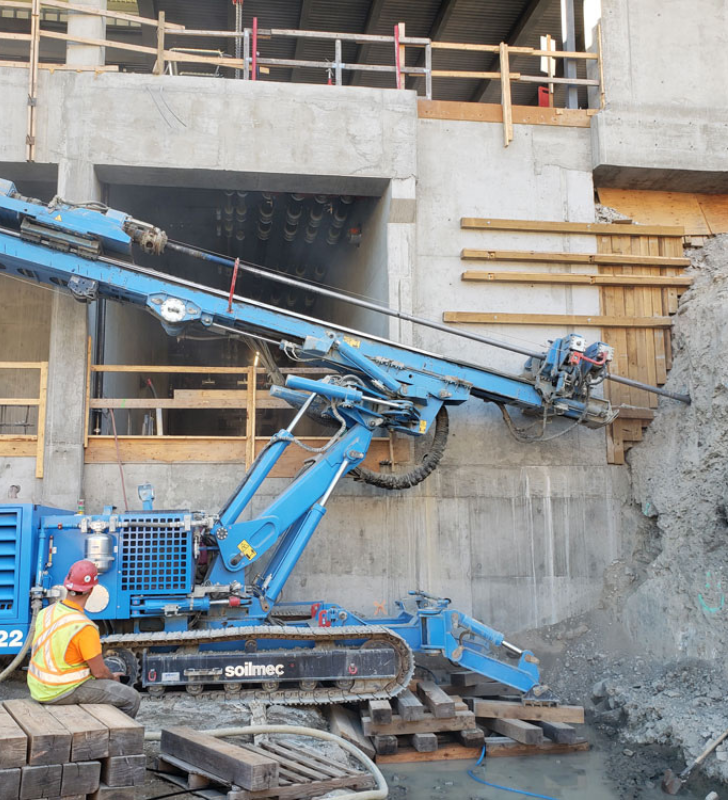
Helical piles support retaining wall construction in sites with narrow lane access where continuous structural support must be maintained throughout construction. A combination of compression and tension helical piles, combined with cast-in-place concrete, can replace conventional approaches at a fraction of the disruption.
05
ie Down Anchors and Buoyancy Control
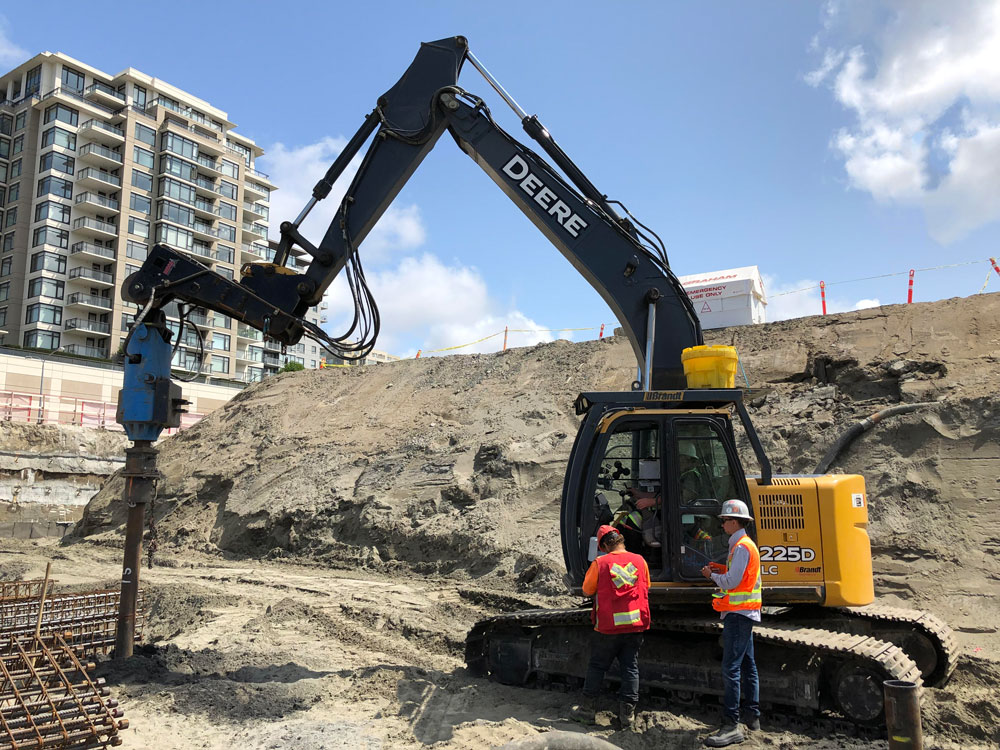
On sites with a high water table, helical anchors resist uplift forces and provide buoyancy control for large structures. They can be installed through previously improved soils including stone column treated ground, and load tested to verify performance before full production begins.
06
Infrastructure and Public Works
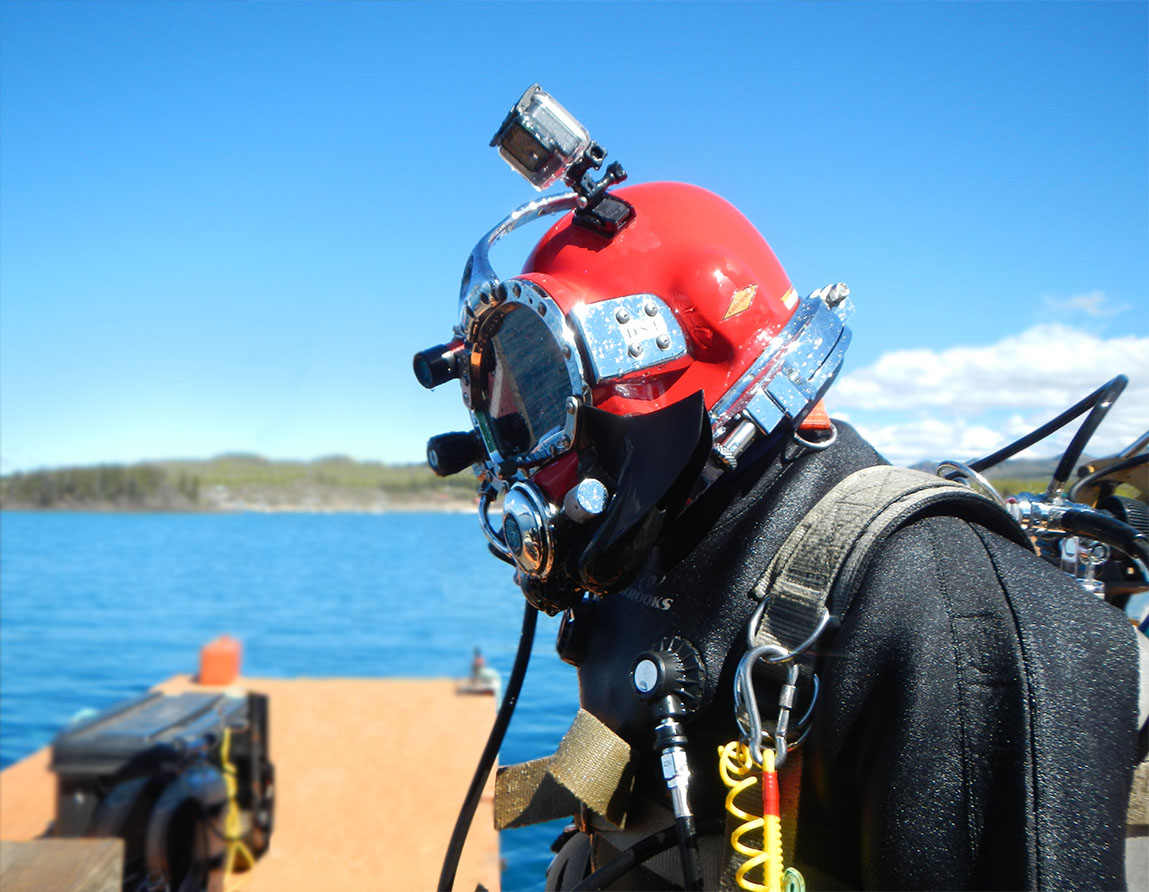
Helical piles handle the load and depth requirements of infrastructure projects. They can be adapted to highly unusual site conditions — including underwater installations, busy highway intersections, and remote locations with no road access.
Types of Helical Piles

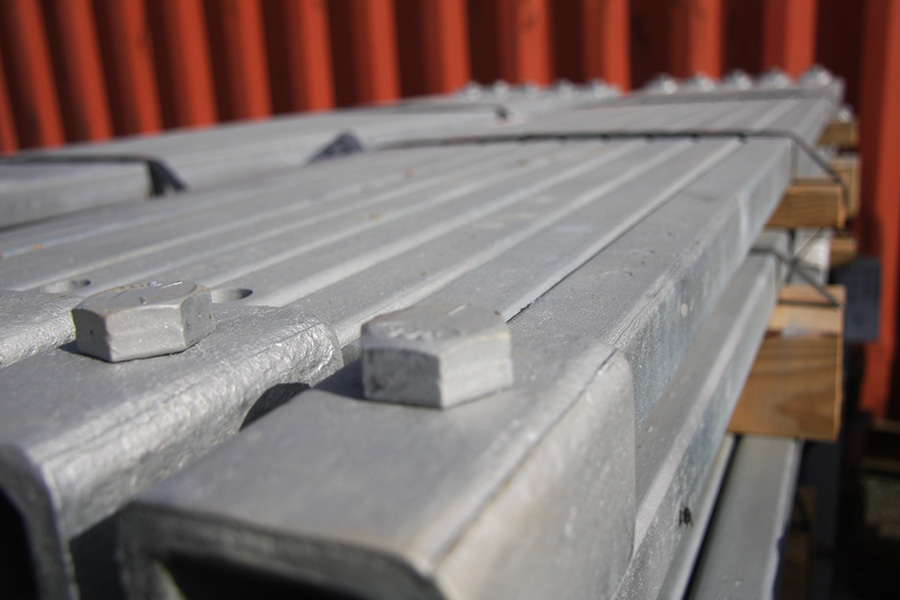
Square Shaft
Consists of solid square shafts, ranging from 1.5″ to 2″. The piles are typically used for ultimate loads between 100 and 650 kN (25-150 kips) but have been tested to loads in excess of 900 kN (200 kips) in unique situations.
Square shaft products are generally used in small to moderate loading applications, and they provide excellent tension resistance. Square shaft piles are able to penetrate dense and cobble-rich soil when compared to their helical pipe pile equivalents, but they have lower resistance to buckling and negligible lateral load resistance.
Square Shaft / Pipe Combo
These piles combine some of the benefits of square shaft and small diameter pipe helical piles. The pile starts with a square shaft and transitions to small diameter pipe. Where depths and soils allow, this pile type provides the excellent penetration of the square shaft piles in addition to the lateral and buckling resistance of the pipe piles.
Adapters take all square shaft products and couple them with 2 7/8″, 3 1/2″, or 4 1/2″ pipe shaft extensions. This makes the combo pile well suited to sites where the upper soils contain cobbles or dense fill that would resist a pipe-only pile, but where lateral loads or buckling potential at depth require a pipe section.

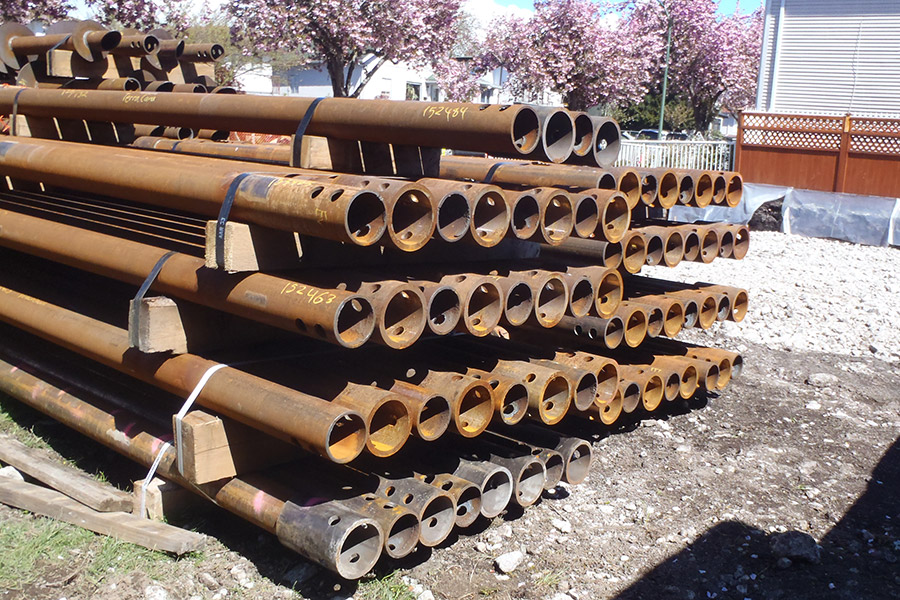
Small-Diameter Pipe
Small-diameter pipe piles consist of pipe sections ranging from 2 7/8″ to 5.5″ in diameter, with wall thicknesses ranging from 0.203″ to 0.375″ depending on the application and loading. These piles can withstand similar loads to the square shaft pile (100–650 kN, 25–150 kips), but they provide superior buckling resistance and lateral load resistance. Small-diameter pipe helical piles penetrate well into sand and clay, but can be difficult to install in cobble-rich soil.
Where lateral loading is an important design factor, small-diameter pipe piles are often the preferred choice over square shaft. Couplings are formed as cold upset expanded sockets or pipe sleeves welded to the shaft ends, providing a robust connection between segments
Large-Diameter Pipe
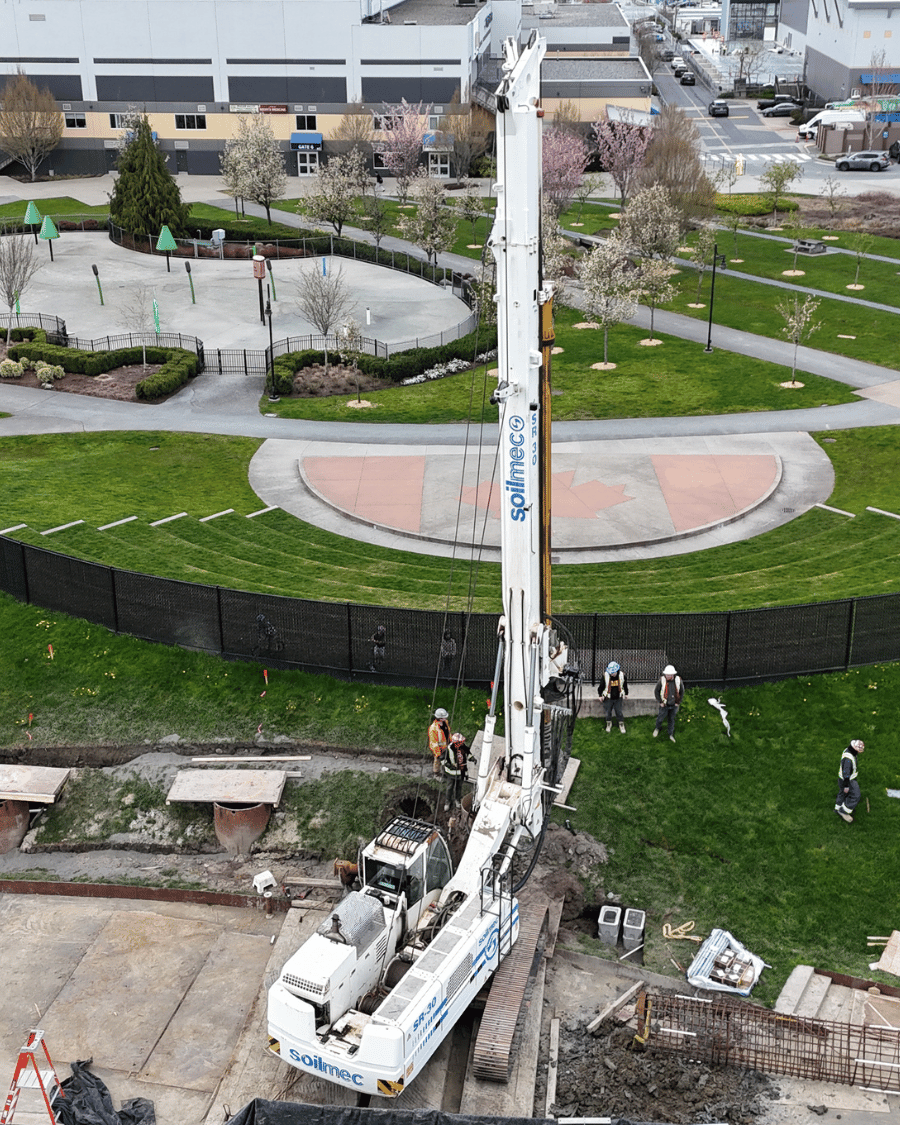
These piles are the newest emerging product and have gained significant popularity over the last ten years. They consist of pipe shafts ranging from 7″ to 30″ or greater. These piles require large equipment to install and can withstand loads in excess of 2500 kN (560 kips).
Large-diameter pipe piles are suited to heavy commercial, industrial, and infrastructure applications where high compression and lateral loads are required. Helical plates are spaced far enough apart that each functions independently as an individual bearing element — the capacity of one helix is not influenced by the helix above or below it. Segments are joined with bolted couplings, and installation depth is limited only by soil density and project economics.
Technical specifications
Advantages of Helical Piles
Suitability For Low Headroom & Other Limited-Access Areas
Helical piles can be fabricated and installed as part of modular systems to accommodate space constraints and low headroom.
Wide Range Of Allowable Loads
With four types of helical piles to choose from, there are efficient options for a wide range of structural requirements.
Adaptable To Different Installation Angles
Can be placed at an angle in order to avoid interfering with structures overhead. They can even be installed horizontally for earth retaining projects.
Removable & Reusable
Helical piles can be removed after installation and reused on other projects, making them a cost-effective option for temporary foundations and shoring applications.

Helical Piles have significant benefits from a structural and design perspective
Need a Foundation Solution for restricted access or difficult ground conditions?
Finance & Project Management Benefits
- Lower Cost Than Driven Or Drilled Piles.
Because screw piles are simpler and faster to install there are cost savings for labour and equipment.
- Ease & Speed Of Installation
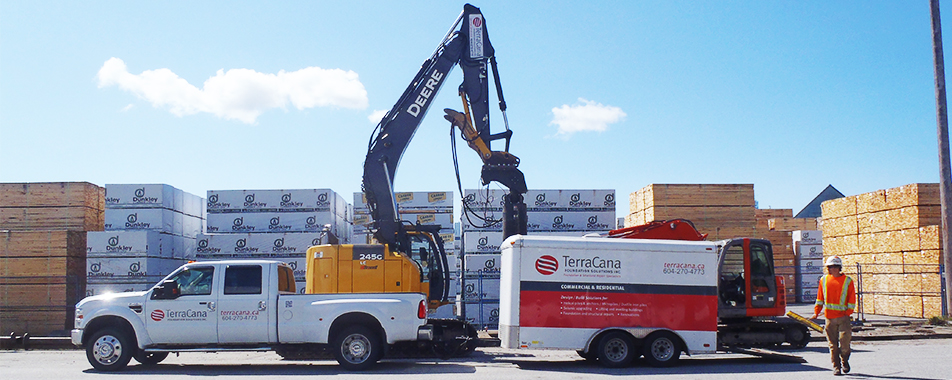
Can usually be installed by two people using conventional equipment.
- Little Or No Dependence On Weather
Can be installed in almost any weather condition.
- Minimal Disruptions
Can be installed with much less noise and vibration than conventionally driven piles.
- Little Or No Earthwork & Spoil Material
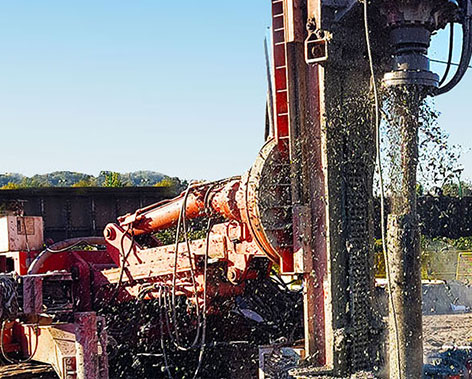
Helical piles displace very little soil, which is a particular advantage at contaminated sites. There is little or no requirement for removal of excess soil.

How Are Helical Piles Designed?
Helical piles require the design input of a professional engineer (P. Engineer). Some standard designs have been developed for the most common situations, but each case needs to be reviewed. To design a pile, the engineer reviews three factors:
Applied Load
The loads that the structure will apply to the pile it connects to. These loads include the dead load, live load, lateral loads, and seismic loading that the pile is being used to resist.
Soil Parameters
Soil strength is reviewed to make sure that it can withstand the load applied by the pile and helix plates.
Pile Capacity
The amount of load that a pile can resist. The pile shaft and connection are selected to resist the applied load. The helix plates are designed based on soil information to ensure that they are the right size.
Termination brackets transfer the load to the pile at the head. The termination bracket is connected to the foundation, typically by attaching it to or casting it into a concrete foundation, or directly to a steel grillage structure.

Dealing with obstructions
Every site presents different challenges. TerraCana’s field experience and in-house engineering mean we’ve developed practical solutions for the ground conditions that stop other contractors.
Pre-existing soil improvements
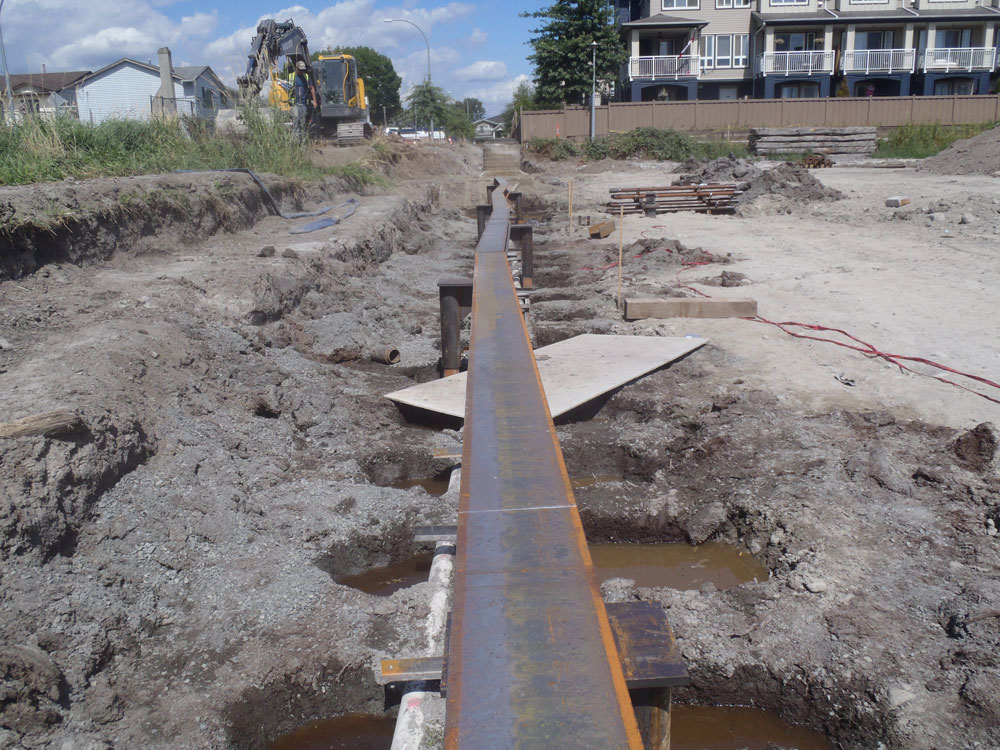
In Richmond, helical anchors had to be installed through previously placed stone columns used to increase soil density — requiring precise positioning and coordination across multiple trades working simultaneously in the excavation.
Soft ground & limited machine access
On a peat bog site in East Vancouver with 8 metres of soft peat and silt, the machine couldn’t track across the ground without sinking. TerraCana used timber swamp pads as a platform, carefully relocating them between pile positions to complete the installation without incidents.
Variable fill with buried concrete & glacial till
For the North Vancouver soundwall, the soil included variable fill over glacial till with broken concrete buried in the top 5 feet. TerraCana developed a custom installation tool and termination bracket to bypass the deposits and reach the required depth.
See it in action
Case studies
FAQ
What loads can be carried by helical screw piles?
Do helical piles cause any vibrations?
Do you have to remove soil for helical piles?
How do helical piles work?
How are helical piles installed?
How much do helical piles cost?
How deep can helical piles go?
How long do helical piles last?
Are helical piles better than auger piles?
What soil conditions are suitable for helical piles?

Have more questions? Contact us!
“Early in the project we encountered an issue with the design of the helical piles to be installed. TerraCana was very responsive in providing an alternative which was then approved by the engineer. The work was carried out in a professional manner to ensure they not only met but exceeded the requirements of the contract agreement.”
How were helical piles developed?
Helical piles are a long-standing technology, with the first recorded use in 1836 for moorings, followed by the construction of the Maplin Sands lighthouse in England in 1838.
In the nineteenth century, helical piles were the most prominent deep foundation technology. They received UK patents in 1833 and 1847 and US patents in 1845.
Typical early screw piles contained either a 5″ diameter cast iron shaft or 8″ timber shaft with helix plates that were 2.5′ to 4′ in diameter.
Throughout the late 1850s to the 1870s, over 50 structures were built on helical piles, predominantly lighthouse foundations, tiebacks, moorings, ocean front piers, breakwaters, and railway trestles.
By the late 1800s, the technology had spread from England to other parts of the world, including the remainder of Europe, the US, Japan, Australia, and India.
At that time, installation was usually powered by hand or by oxen. Toward the late 1800s, some steam power installations were completed.
The early 1900s to the 1950s saw the rise of other deep foundation systems, including driven piles. The use of helical piles declined as other pile types advanced technologically.
From the 1950s onward, advances in equipment and hydraulics, as well as the need for alternative foundation options, have meant that helical piles are one of the fastest growing deep foundation technologies.

Need
helical piles
for your next project?
TerraCana provides design, engineering, and installation.