The Hawkes Creek Bridge required foundation rehabilitation after years of active foundation movement threatened the structural integrity of one of Canada’s tallest rail bridges. Located 25 km north of Williams Lake in remote BC terrain, TerraCana delivered micropile underpinning, concrete rehabilitation, and sheet pile shoring — completing the project three weeks ahead of schedule without a single train shutdown or delay.
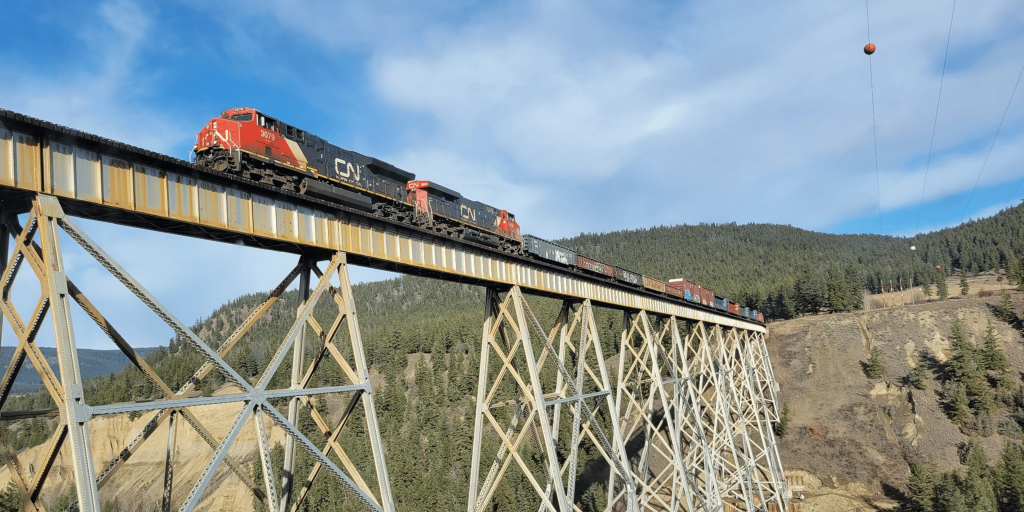
The Hawkes Creek Bridge, a 254-foot-tall structure and one of the tallest rail bridges in Canada, had experienced active foundation movement over several years. At 109 years old, the bridge required foundation rehabilitation to halt ongoing structural displacement while remaining fully operational for active rail traffic.
Access was the defining challenge. The bridge sits in remote terrain 25 km north of Williams Lake with no conventional site access. CN’s original plan called for accessing the site via the rail line itself.
Working beneath an active rail bridge at nearly 300 feet in height, in the middle of a BC winter with temperatures dropping below 30 degrees Celsius, demanded a solution that addressed logistics as much as engineering.

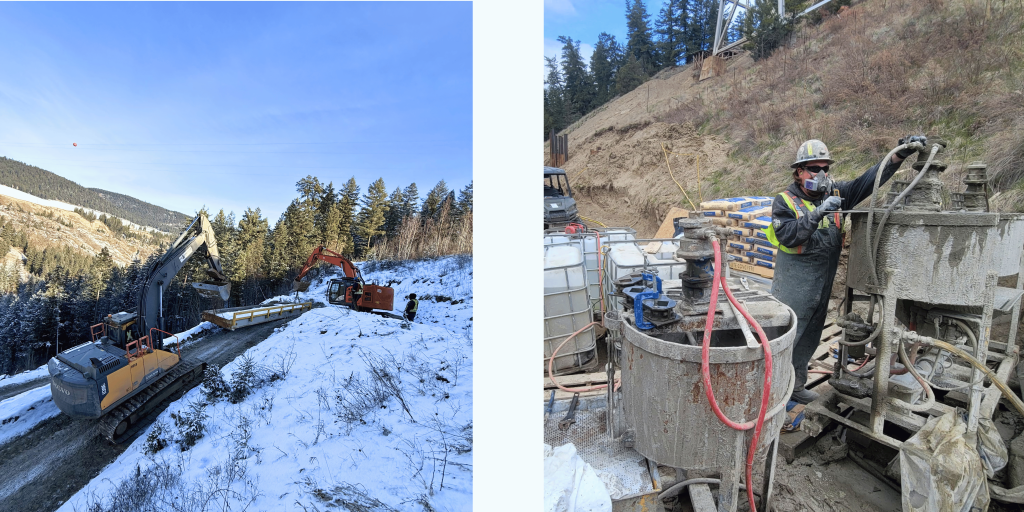
TerraCana developed an alternative access strategy, working with a local landowner to approach the site overland rather than via the rail line. The team built a roadway through pastures to the top of the bridge, then constructed switchback access roads down to the base of the nearly 300-foot-tall structure — all through extreme winter conditions. Progressive Ventures completed the access road construction.
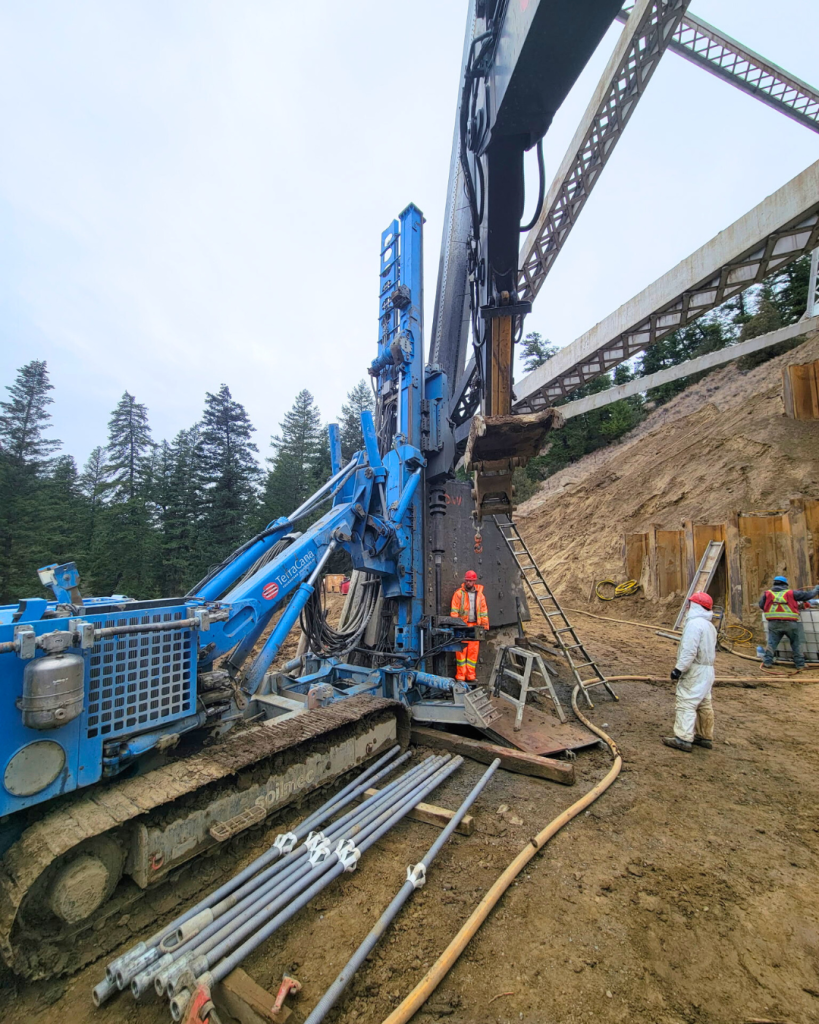
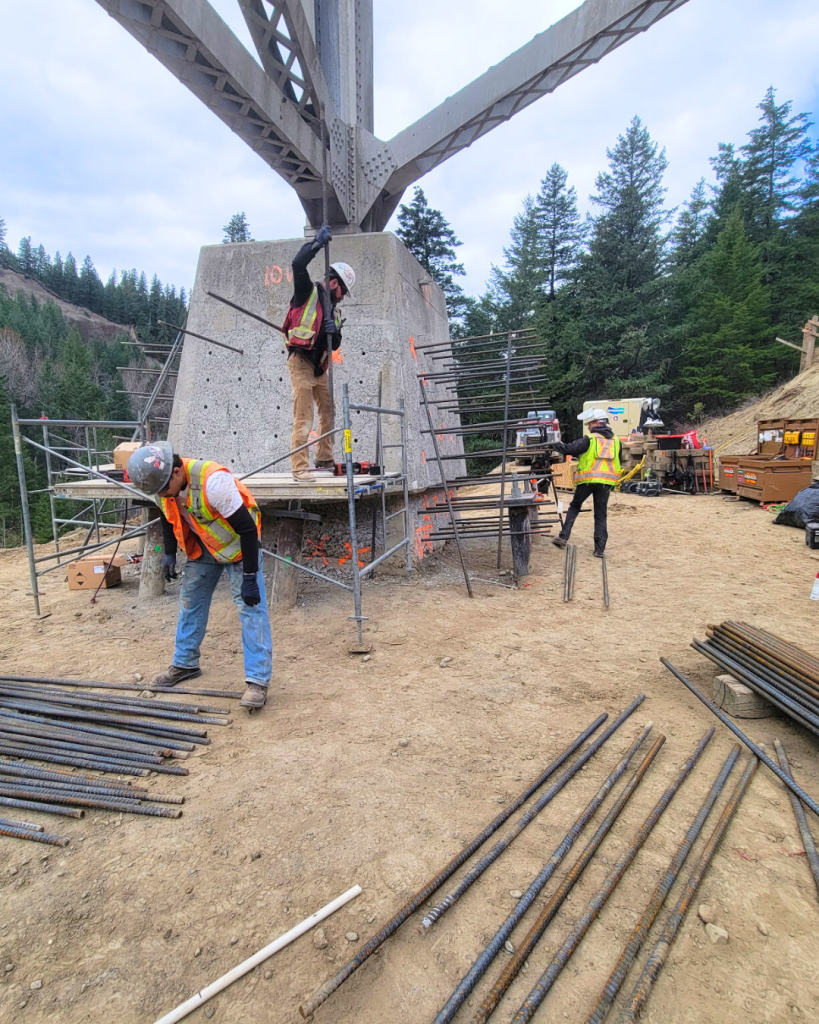
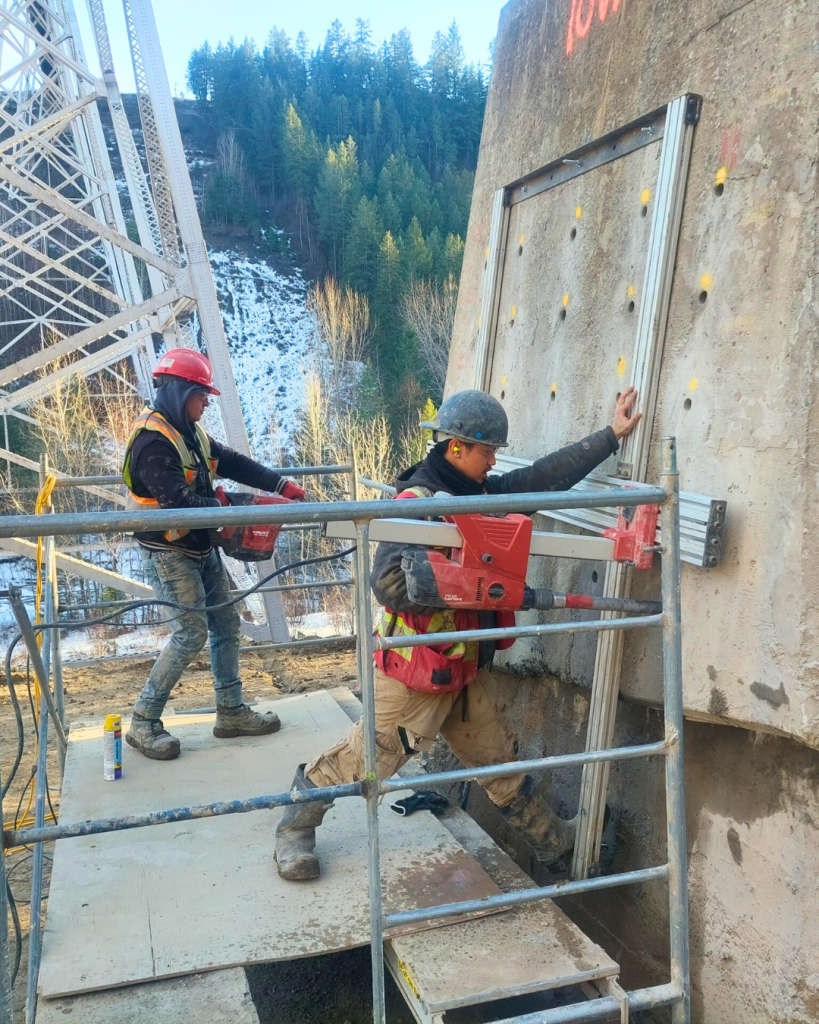
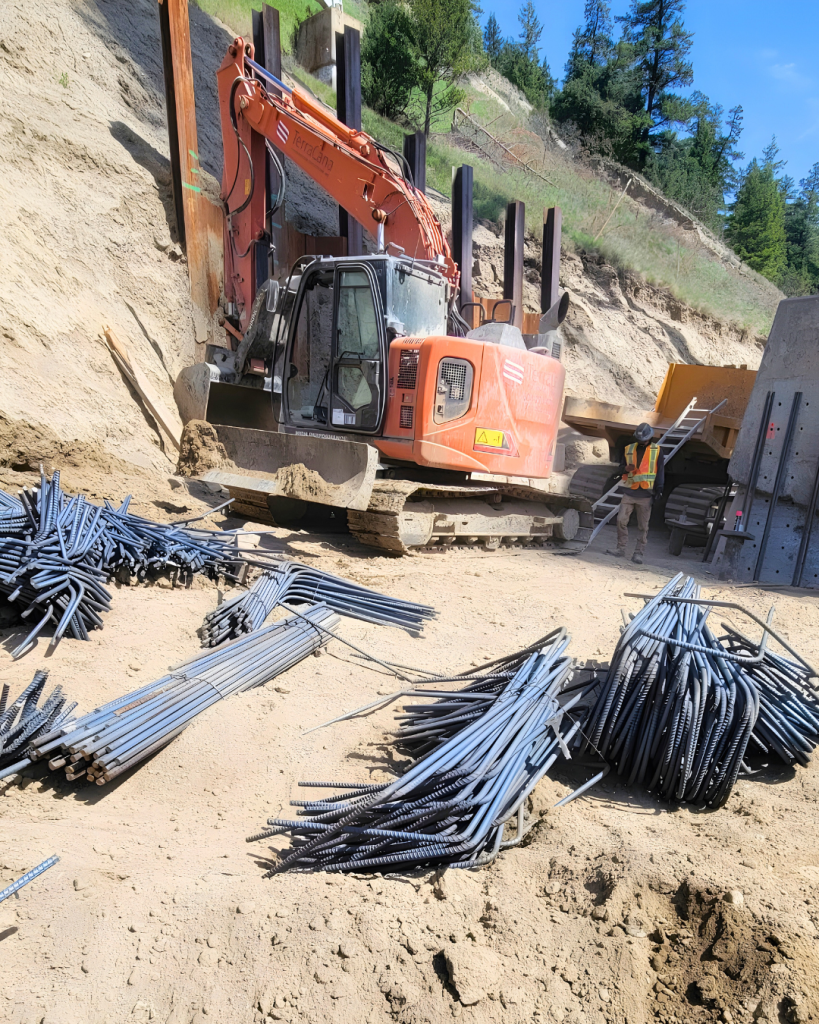
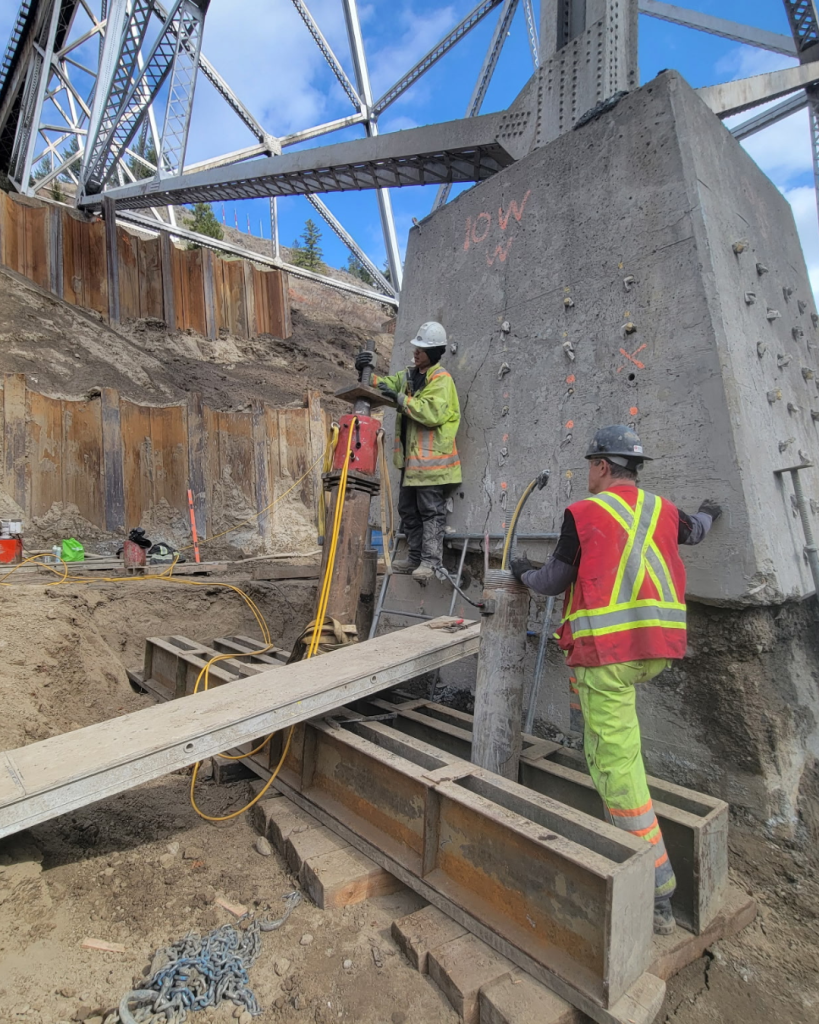
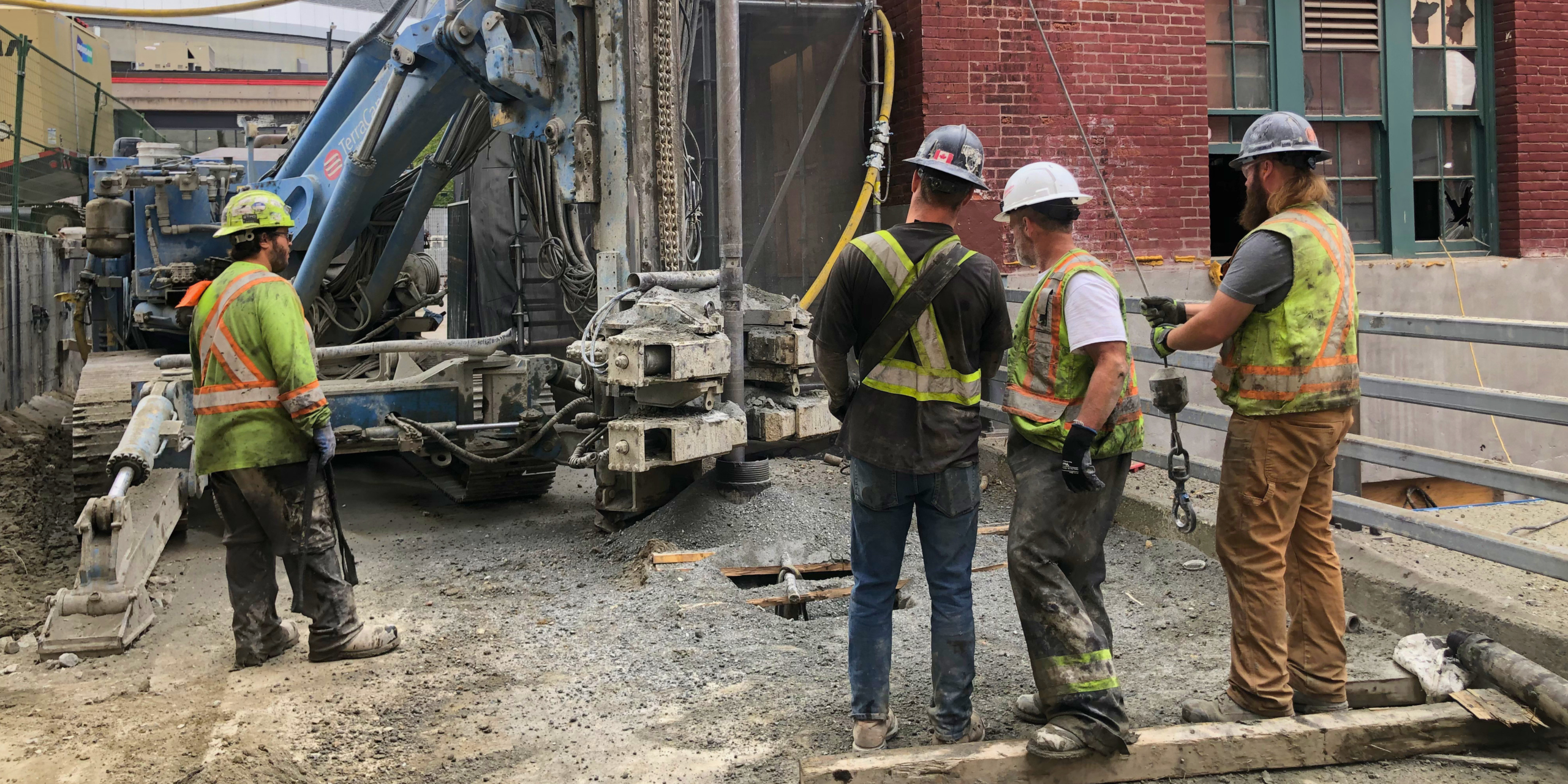
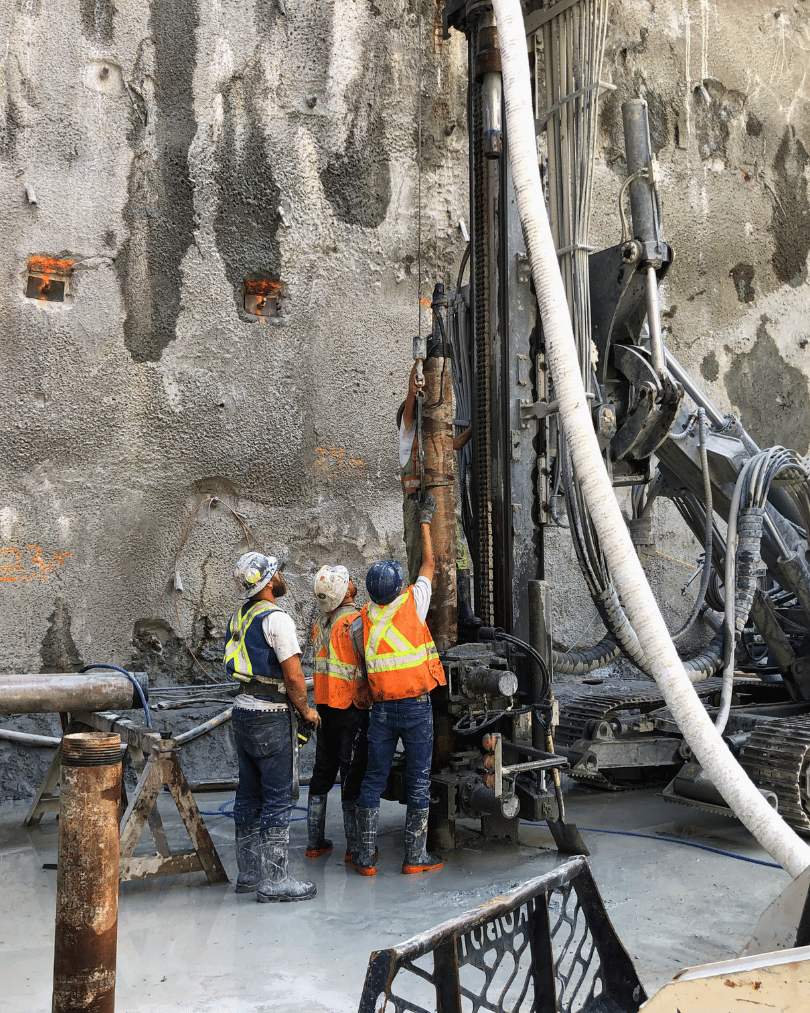
With access established, TerraCana installed sheet pile shoring to stabilize the steep slope and allow excavation of the existing footings. Over 500 dowel holes were drilled 3 feet deep into the existing concrete, followed by installation of 32 micropiles at 20 metres long with 7.5-metre permanent steel casings. KCB served as both the structural and geotechnical engineer, while Structec engineered the temporary work pads.
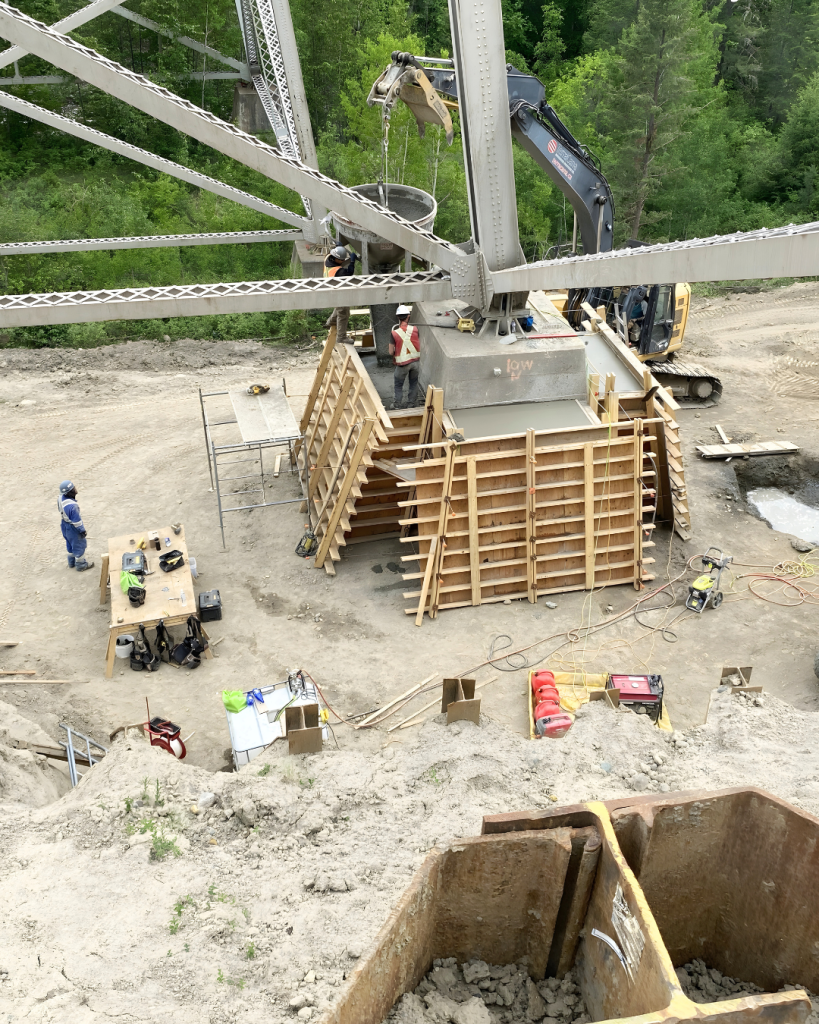
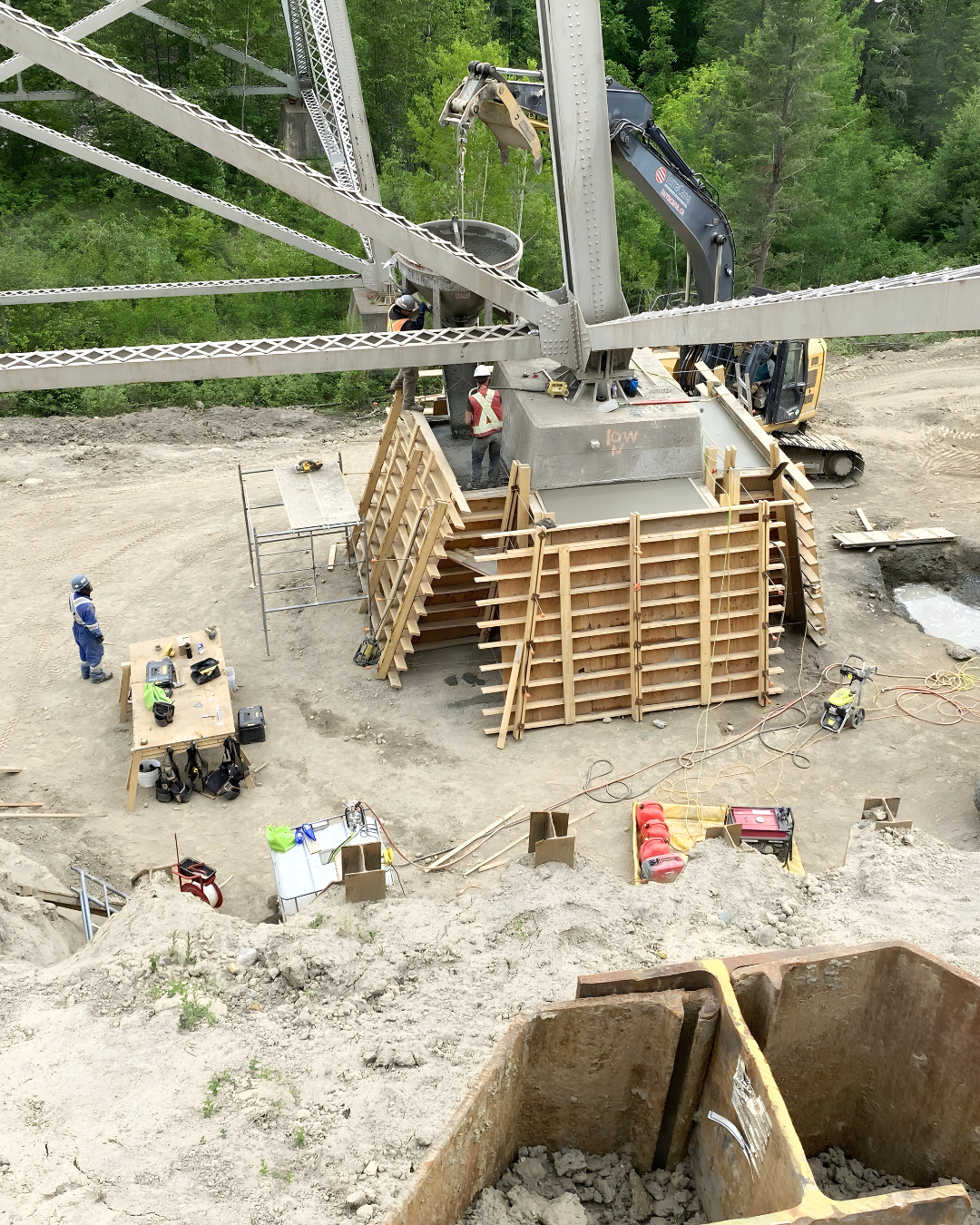
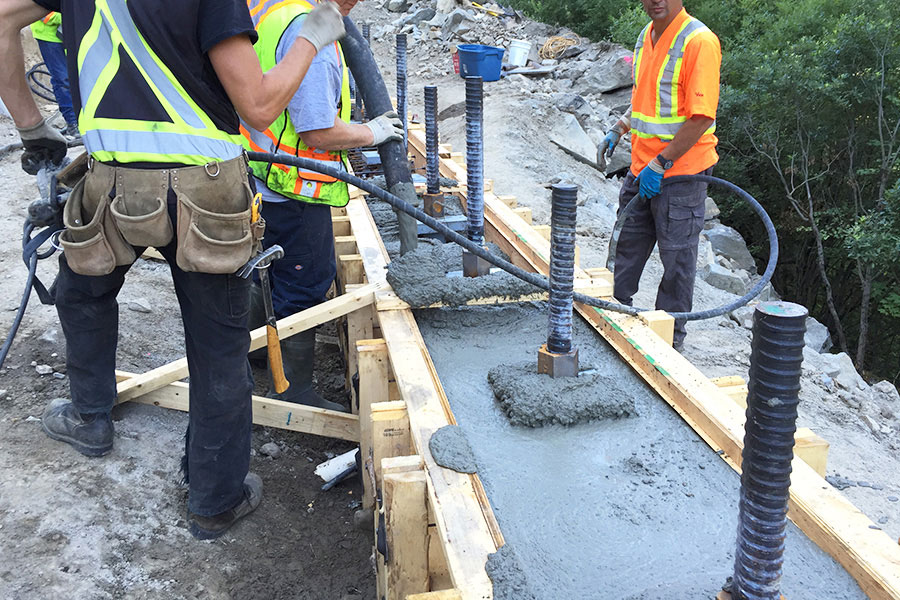
Concrete placement presented its own logistical challenge. The site sat an hour from town, leaving only one hour of working time after the two-hour placement window. TerraCana brought in Sustainable Concrete to set up an on-site batch plant, effectively doubling the available working time. Concrete was transported down the switchback roads in tracked Morooka carriers, loaded into a crane bucket, and poured into forms — 120 cubic metres total. Harris Rebar handled all concrete reinforcing, and Cashmere Concrete completed the formwork.
A rigorous vibration and bridge movement monitoring program ran throughout construction to protect the active structure.

30+ Years of Experience
TerraCana has been installing foundation solutions across BC and Western Canada since 1992. That’s three decades of difficult sites, unusual ground conditions, and projects that needed more than a standard approach.
Most of our work comes from contractors who’ve worked with us before — or who were referred by someone who has.