Foundation Specialists - British Columbia
604-270-4773
info@terracana.ca

House Foundation
Construction & Repair

We bring the same creative problem-solving solutions to your house foundation project.
TerraCana – Home Foundation Contractor

Certifications & partnerships

House Foundation Construction & Repair

TerraCana works with architects and engineers preparing specifications for new homes. We also offer visual inspections and estimates to homeowners who suspect they have foundation problems.

These homeowners are often worried and have many questions. How serious are the warning signs? What are the options for repairing the damage? What costs are involved? How intrusive is the work?

Our goal is to remove all mystery from the process so you can feel reassured knowing that you have a reliable foundation. TerraCana has decades of experience building and restoring foundations of all kinds across Metro Vancouver and Western Canada.

Need an estimate on your new home’s foundation cost?

House Foundation Applications

TerraCana installs and repairs house foundations across a wide range of residential project types. Here is where our work commonly applies.

01

New Home Foundations

We work directly with architects and structural engineers on new builds. Our in-house engineering team coordinates with your permit drawings and installs the right pile system for site conditions.

02

Home Additions & Sunrooms

Adding square footage to your home requires an engineered foundation beneath the new structure. We install piled foundations for additions, sunrooms, and covered porches.

03

Decks & Outbuildings

Helical piles for residential decks perform better in BC’s freeze-thaw cycles than shallow concrete footings, with minimal yard disruption and no spoils to remove.

04

Full-Height Basements

We support new basement construction including shoring and foundation systems for homes being built with or converted to full-height basements.

05

Foundation Underpinning

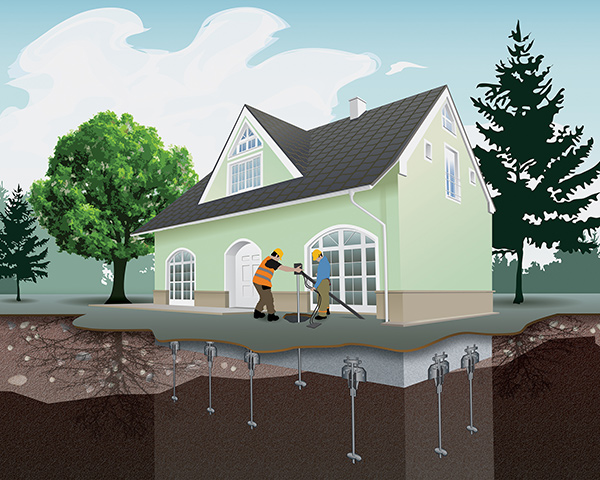
For settling or sinking foundations, we install helical or driven piles through the existing footing into competent bearing soil, then use those piles to lift and stabilize the structure.

06

Lifting & Levelling

TerraCana can lift structures that have settled and return them to a level position in a controlled and measured way to avoid additional stress on the structure during the process.

Helical Pile Applications

01

New builds

Helical piles are ideal for new construction where conventional excavation isn’t feasible: soft soils, tight lots, or vibration-sensitive sites. TerraCana has installed helical pile foundations for residential duplexes, commercial facilities, and multi-storey developments across BC.

02

Environmentally Sensitive Sites

Helical piles displace minimal soil and require a small equipment footprint, making them the preferred choice in sensitive environments. TerraCana installed 220 piles for an 1,100-foot boardwalk foundation in the Tsawwassen estuary, preserving the surrounding habitat throughout construction.

03

Existing structures

When an existing structure has settled or needs additional load capacity, helical piles can be installed with minimal disruption to the building and its occupants. TerraCana installed piles inside a fully operational brewery in Surrey, working within inches of existing equipment without halting production.

04

Utility Infrastructure

Helical piles can be designed around existing underground services. In Queensborough, TerraCana suspended a fibre-optic duct bank from helical piles during foundation pre-loading, protecting sensitive cables while allowing controlled soil settlement beneath.

05

Restricted access shoring

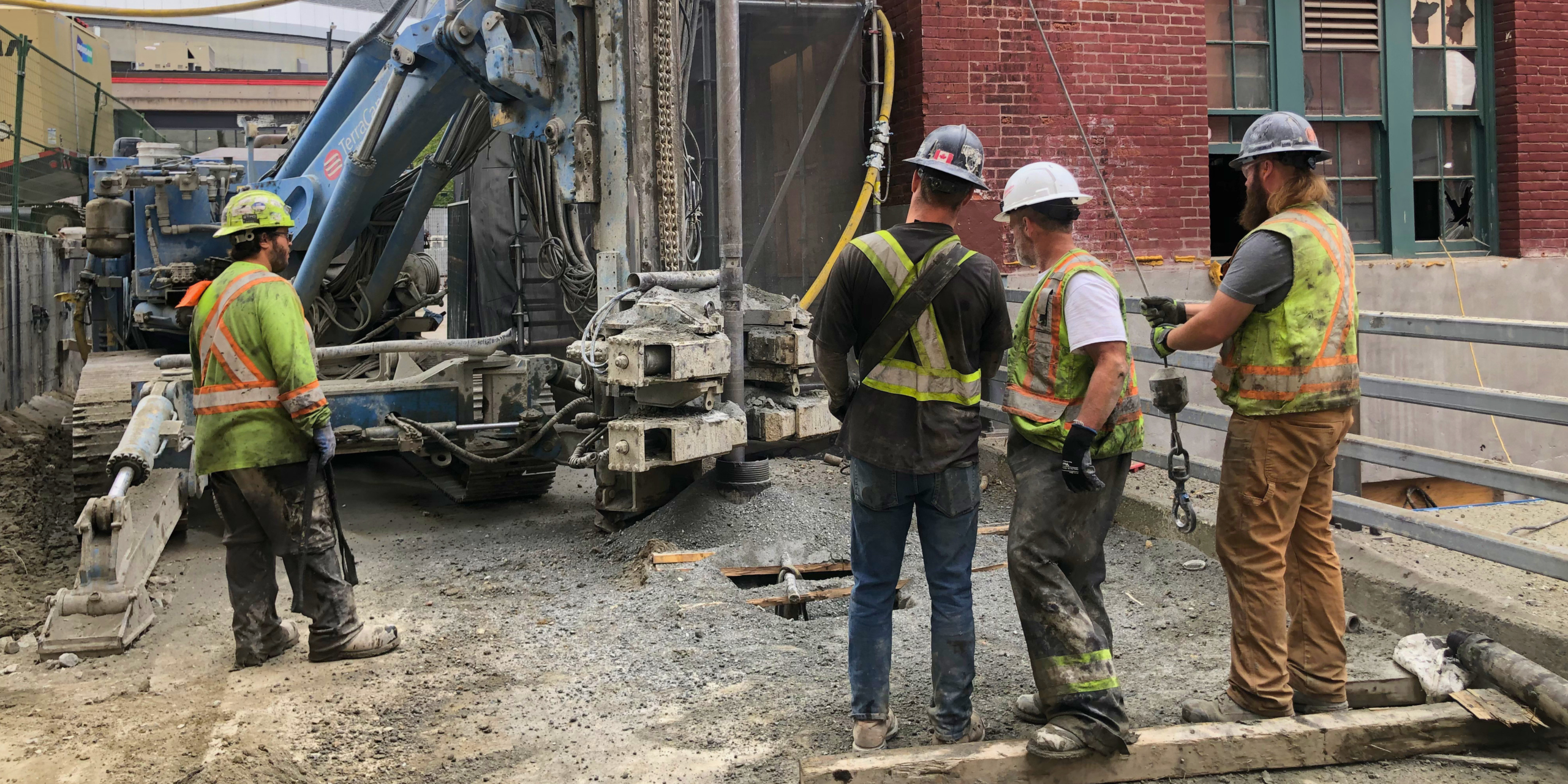
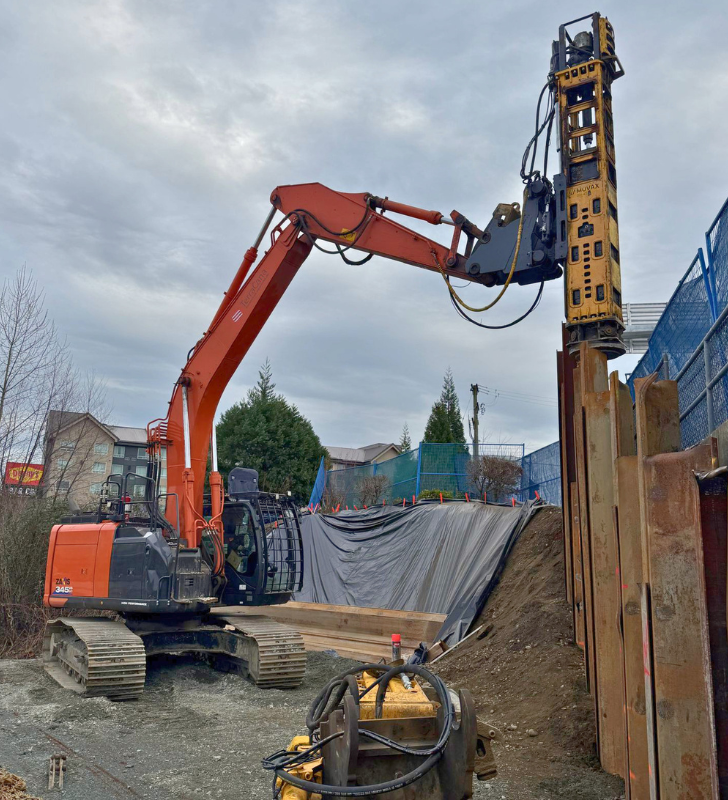
Where large shoring equipment can’t mobilize due to tight access or low headroom, helical piles offer a practical alternative. TerraCana delivered a shoring solution for a multi-level underground parkade in Victoria using helical tieback anchors, H-Piles, and drilled pipe piles on a constrained urban site.

06

Soil Stabilization

On sites with soft or unstable ground, helical piles transfer loads past weak upper layers to competent bearing strata below. TerraCana completed multiple load tests before installing 161 piles for a Richmond residence built on peat over river sand.

07

Infrastructure & Public Works

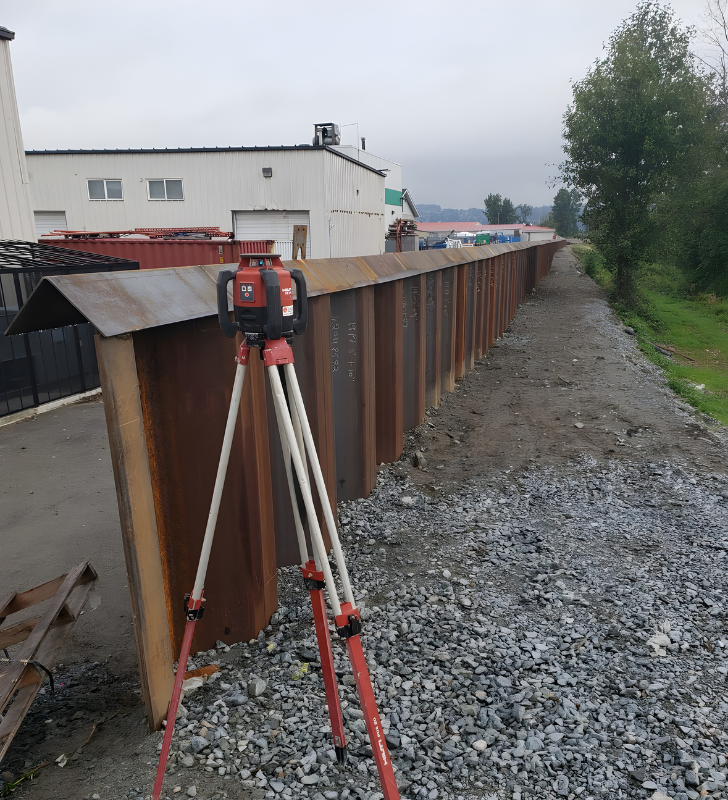
Helical piles handle the load and depth requirements of municipal and infrastructure projects. TerraCana installed 120 large-diameter screw piles for the City of North Vancouver’s Phillips Avenue soundwall, developing custom tooling to navigate variable fill and glacial till.

08

Contaminated Sites

Helical piles generate no spoils and require no excavation, a critical advantage where soil removal is restricted or prohibited. They are the most practical deep foundation option on contaminated or environmentally regulated sites.

Types of House Foundation Solutions

TerraCana offers several engineered foundation systems for residential construction and repair. The right system depends on your soil conditions, structure type, and site access.

Helical Pile Underpinning

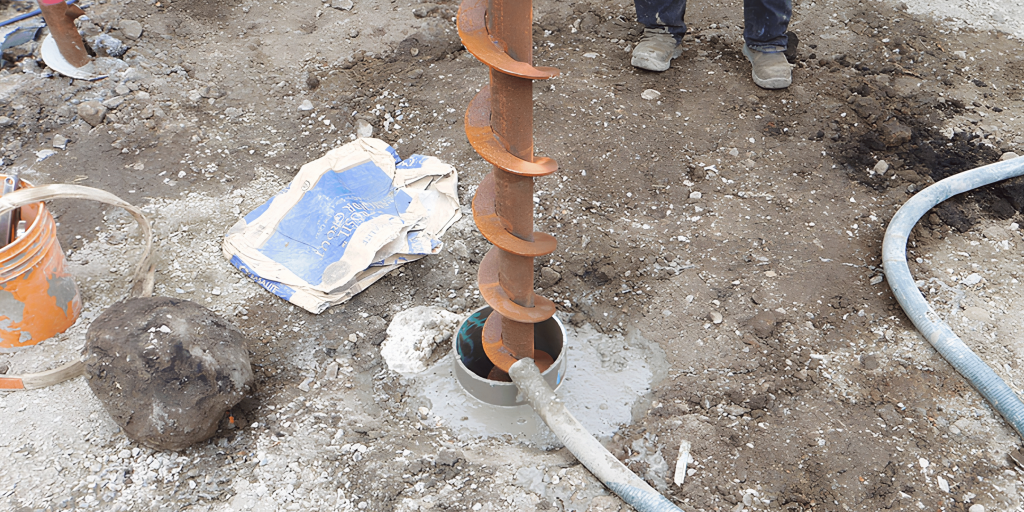
The most widely used residential underpinning solution. Installed through the existing footing, advanced into bearing soil below, and used to lift and stabilize the structure. Works in tight access, no heavy machinery required on your lawn, minimal site disturbance.

Driven Pipe Pile Underpinning

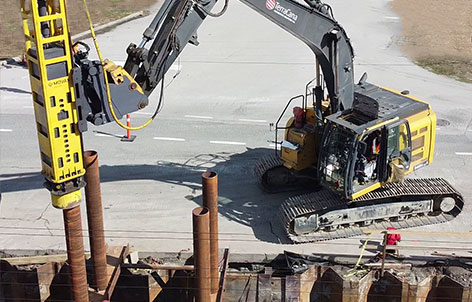
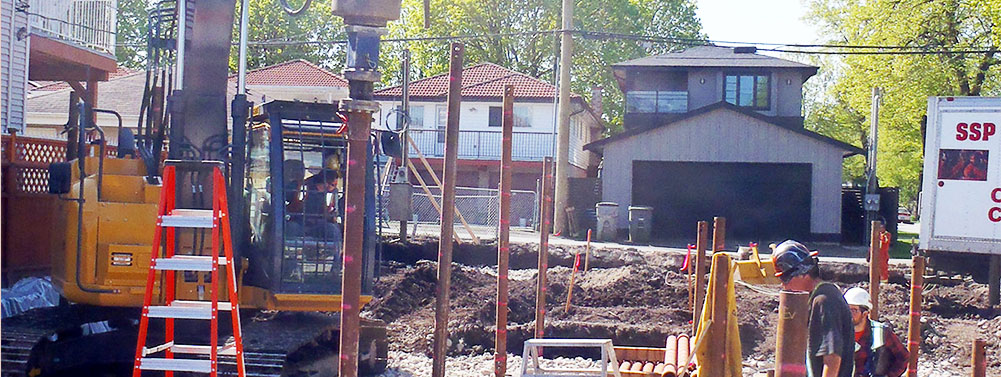
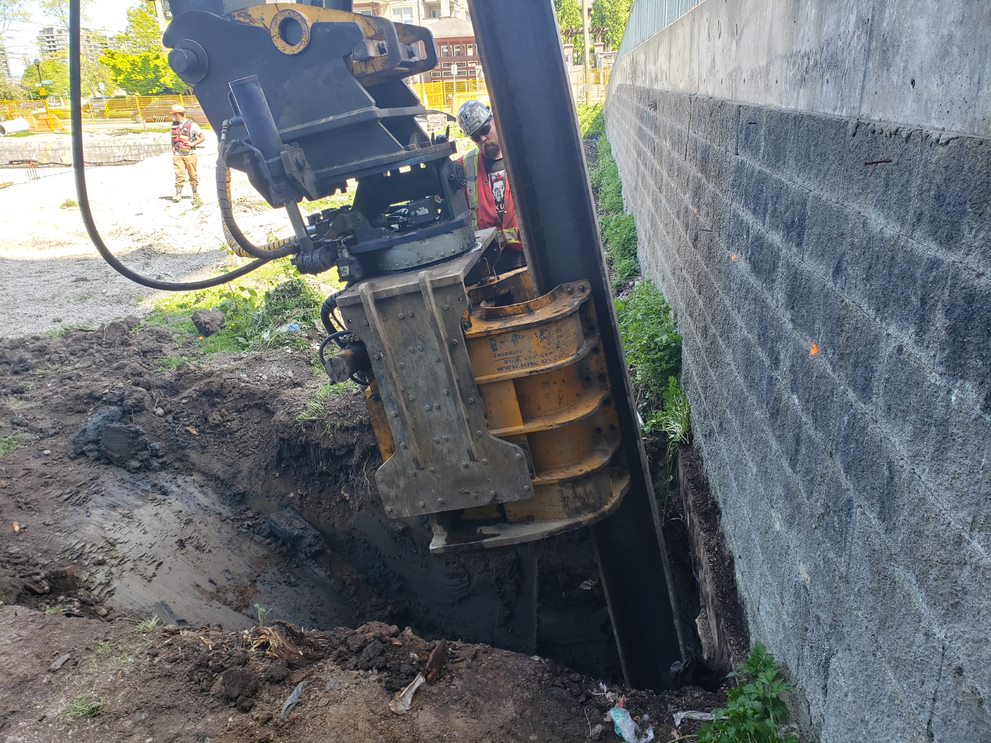
Where soil conditions and access allow, driven pipe piles provide a high-capacity underpinning solution. TerraCana crews have installed driven piles beneath homes, additions, and outbuildings throughout the Lower Mainland and across BC.

Micropiles

Where access is extremely limited, such as inside an existing basement or beneath a low-clearance structure, micropiles offer a compact and powerful solution. They can be installed at angles that larger equipment cannot reach.

Types of Helical Piles

Square Shaft

Consists of solid square shafts, ranging from 1.5″ to 2″. The piles are typically used for ultimate loads between 100 and 650 kN (25-150 kips) but have been tested to loads in excess of 900 kN (200 kips) in unique situations.

Square shaft products are generally used in small to moderate loading applications, and they provide excellent tension resistance. Square shaft piles are able to penetrate dense and cobble-rich soil when compared to their helical pipe pile equivalents, but they have lower resistance to buckling and negligible lateral load resistance.

Small-Diameter Pipe

Small-diameter pipe piles consist of pipe sections ranging from 2 7/8″ to 5.5″ in diameter, with wall thicknesses ranging from 0.203″ to 0.375″ depending on the application and loading. These piles can withstand similar loads to the square shaft pile (100–650 kN, 25–150 kips), but they provide superior buckling resistance and lateral load resistance. Small-diameter pipe helical piles penetrate well into sand and clay, but can be difficult to install in cobble-rich soil.

Where lateral loading is an important design factor, small-diameter pipe piles are often the preferred choice over square shaft. Couplings are formed as cold upset expanded sockets or pipe sleeves welded to the shaft ends, providing a robust connection between segments

Square Shaft / Pipe Combo

These piles combine some of the benefits of square shaft and small diameter pipe helical piles. The pile starts with a square shaft and transitions to small diameter pipe. Where depths and soils allow, this pile type provides the excellent penetration of the square shaft piles in addition to the lateral and buckling resistance of the pipe piles.

Adapters take all square shaft products and couple them with 2 7/8″, 3 1/2″, or 4 1/2″ pipe shaft extensions. This makes the combo pile well suited to sites where the upper soils contain cobbles or dense fill that would resist a pipe-only pile, but where lateral loads or buckling potential at depth require a pipe section.

Large-Diameter Pipe

These piles are the newest emerging product and have gained significant popularity over the last ten years. They consist of pipe shafts ranging from 7″ to 30″ or greater. These piles require large equipment to install and can withstand loads in excess of 2500 kN (560 kips).

Large-diameter pipe piles are suited to heavy commercial, industrial, and infrastructure applications where high compression and lateral loads are required. Helical plates are spaced far enough apart that each functions independently as an individual bearing element — the capacity of one helix is not influenced by the helix above or below it. Segments are joined with bolted couplings, and installation depth is limited only by soil density and project economics.

Advantages of Piled House Foundations

Works in Tight Access

Equipment fits through gates, beside existing structures, and in constrained yard spaces. We have completed residential projects that other contractors could not access.

Minimal Site Disruption

Helical pile installation requires compact equipment and produces no spoils. Most residential projects are completed in days without damaging your yard, driveway, or landscaping

Immediate Load Transfer

Unlike concrete underpinning, which requires curing time, piled systems transfer load immediately after installation. No waiting period before the structure is reloaded.

Proof Tested on Installation

Every pile is monitored during installation. Where required, proof testing confirms actual capacity rather than relying on estimates alone

There are significant benefits from a structural and design perspective

Need a Foundation Solution for restricted accesss ot difficult ground conditions?

Engineering and Design

TerraCana is not just a crew that shows up with equipment. Working alongside engineering partner StrucTec, TerraCana brings technical design capability to every project from the first site visit through to installation.

Having a dedicated engineering partnership means the foundation solution can be designed, optimized for cost and performance, and installed by one coordinated team. This is what separates TerraCana from contractors who only install what someone else has designed.

For residential projects this matters because conditions on site often differ from what a geotechnical report describes. Having engineering support close to the work means faster decisions and better outcomes when conditions change.

Dealing With Foundation Problems

BC’s soil conditions, climate, and aging housing stock create a predictable set of foundation problems. TerraCana has resolved all of them.

Settling & Sinking Foundations

When a foundation sinks into soft or unstable soil, the structure above shows the signs: cracks, sticking doors, sloping floors. Helical pile underpinning stabilizes the foundation at depth and can lift the structure back toward level.

Bowing or Cracked Basement Walls

Lateral soil and water pressure on basement walls causes bowing and cracking over time. Helical anchors installed through the wall and into the soil behind it provide a measurable, proof-tested solution to wall movement.

Soft or Unsuitable Soil for New Construction

Many sites in the Lower Mainland have soft marine clay, organic soils, or fill that cannot support a conventional shallow foundation. TerraCana designs pile systems that transfer building loads past the poor material to firm bearing below.

Tight Access & Low Headroom

Older homes, lane houses, and tight urban lots often limit equipment access. Our crews work with compact machines through gates, inside basements, and in confined yard spaces to complete projects that others cannot.

See it in action

Need Residential Foundation Help for Your Project?

Construction, engineering, and design-build services for house foundations across Metro Vancouver and Western Canada.